


The Muslim Ummah: Its Rise and Decline
✒ Raihan Shaheed
17 October 2026, 6 Jumada Al-Awwal 1448 AH
History is not merely a set of scars meant to awaken nostalgia; it is the fuel used to correct the present and build the future. The survival of a community is made possible not within the dungeons of memories, but in the awakening of realities.
The rule of the Rightly Guided Caliphs (Khulafa ar-Rashidun), the House of Wisdom (Bayt al-Hikmah) in Baghdad, the universities of Cordoba, the civilization of Andalusia, the valor of Saladin (Salahuddin al-Ayyubi), the Ottoman Caliphate... all of these are part of historical memory that play a crucial role in boosting the self-confidence of Muslims.
An unmatched transformation in world history took place in the Arabian Peninsula during the seventh century. A society that had for centuries been filled with tribal feuds, idol worship, social injustice, the oppression of women, and a culture of vengeance transformed within just a few decades into one of the most influential civilizations in the world. This change was not achieved through the power of the sword; rather, it came about by transforming the human mind. The Qur'an initially built not a state, but good human beings. Islam teaches that the rise of a society begins with the transformation of individuals.
However, a question we must ask ourselves is: Is history merely something to take pride in, or is it just something to study? Islam never presents history as a subject of nostalgia. The Qur'an narrates the history of past nations to teach the reasons for their success and failure, to draw lessons, and to understand the consequences of firmness in faith versus disbelief.
Allah says: "Indeed, in their stories, there is a lesson for those of understanding" (Qur'an 12:111). "(O Prophet,) Say: Travel through the earth and see what the end of the deniers was" (Qur'an 6:11).
History in the Qur'an is not tales of entertainment; they are lessons in the decrees (laws of history) of Allah. Therefore, when Muslims study history, they must avoid two extreme approaches. The first is that all problems are caused by external forces. The second is shirking the responsibilities of the present by merely recounting stories of past glory.
We do not attain greatness simply because our predecessors were great. The Quran does not hand down the success of one generation as a hereditary right to the next. Every generation must earn its place in history through its own actions.
From the Desert to World Civilization
An unmatched transformation in world history took place in the Arabian Peninsula during the seventh century. A society that had for centuries been filled with tribal feuds, idol worship, social injustice, the oppression of women, and a culture of vengeance transformed within just a few decades into one of the most influential civilizations in the world.
How did this change happen? Historians have given various answers to this question. Some view it as a history of military conquests. Others evaluate it as a political victory. However, for a Muslim, the center of this change was an individual: Prophet Muhammad ﷺ.
At the beginning of the propagation of the divine message in Mecca, Muslims were very few in number. They were socially boycotted.
They faced economic embargoes. They were physically tortured. Some had to leave their homeland and migrate to Abyssinia.
Yet, within a span of just twenty-three years, the history of Arabia changed completely. This change was not achieved through the power of the sword; rather, it came about by transforming the human mind. The Qur'an initially built not a state, but good human beings. Islam teaches that the rise of a society begins with the transformation of individuals. The society established in Medina is a prime example of this. Brotherhoods like the one between the Muhajirun (Emigrants) and the Ansar (Helpers) are rare in history. That society was formed not on the basis of tribe, race, wealth, or language, but on the basis of faith.
The speech delivered by Abu Bakr رَضِيَ ٱللَّه عَنْهُ immediately upon assuming power is still studied today as a model of an ideal ruler. Its core message was: "If I do good, help me; if I do wrong, correct me." It conveys the message that authority is not above criticism.
During the rule of Umar رَضِيَ ٱللَّهُ عَنْهُ, the administrative system, economic reforms, and public governance reached new heights. According to the historian Philip Hitti, "Umar's administrative system was one of the most effective governance systems in world history.”
The Prophet Muhammad ﷺ nurtured his companions to become warriors, teachers, judges, merchants, administrators, and callers to the faith. This history teaches us the fundamental truth that the true rise of a society does not begin with political victory, but from the transformation that takes place in faith, character, and knowledge.
However, the primary reason for the rise of Muslims was not their political power. It was their values. They placed the Qur'an at the center of their lives. They viewed knowledge as an act of worship. They held justice as a value higher than power. They made discipline the foundation of success.
The Prophet Muhammad ﷺ nurtured his companions to become warriors, teachers, judges, merchants, administrators, and callers to the faith (da'wah). This history teaches us the fundamental truth that the true rise of a society does not begin with political victory, but from the transformation that takes place in faith, character, and knowledge. Allah says: "...Indeed, Allah will not change the condition of a people until they change what is in themselves..." (Quran 13:11). Great history cannot be created without creating good human beings.
The Golden Age of Islamic Civilization
The value-based society forged by Prophet Muhammad ﷺ and the Caliphs subsequently grew into one of the greatest civilizations in world history. Through the Umayyad, Abbasid, Seljuk, and Ottoman eras, the Muslim world achieved unprecedented growth politically, economically, and intellectually.
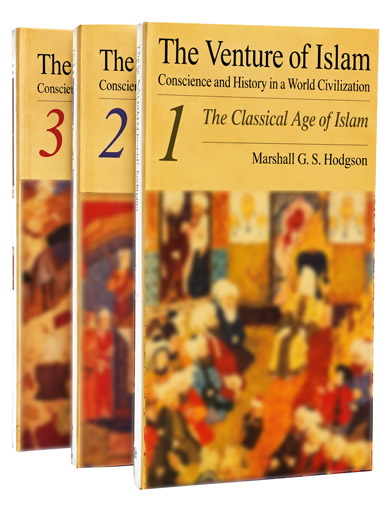
The historian Marshall G. S. Hodgson, in his book The Venture of Islam, describes Islamic civilization as one of the most influential civilizations in human history. This is because Muslims, alongside establishing empires, contributed knowledge, science, and culture to the world.
Baghdad, the capital of the Abbasid Caliphate, was one of the largest centers of knowledge in the world at that time. The 'Bayt al-Hikmah' (House of Wisdom), established during the reign of Caliph al-Ma'mun, is considered one of the earliest great research institutions in the world. Thousands of texts from Greek, Persian, Indian, and Syriac languages were translated into Arabic. This translation movement subsequently paved the way for new research and discoveries.
In mathematics, Muhammad ibn Musa al-Khwarizmi laid the foundations of Algebra. The vital modern computer science term 'Algorithm' originated from his name.
In medicine, Ibn Sina's Al-Qanun fi al-Tibb (The Canon of Medicine) was used as a textbook in European universities for centuries. In the field of surgery, the instruments and treatment methods developed by al-Zahrawi influenced the development of modern surgery.
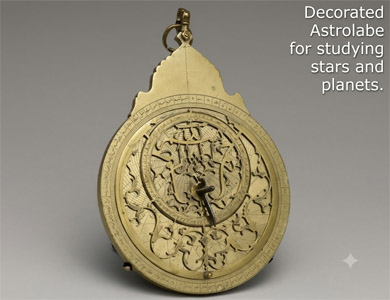
In physics and optics, the research conducted by Ibn al-Haytham made a decisive contribution to the development of the modern Scientific Method. Many historians have described him as "the first true scientist." History bears witness that Muslim scholars made remarkable contributions in almost all fields, including geography, astronomy, chemistry, agronomy, literature, and economics.
Cities such as Cordoba, Cairo, Damascus, Samarkand, Bukhara, and Istanbul became global centers of learning. Students from various parts of Europe arrived to study at the University of Cordoba and its libraries in Andalusia. The same society that studied the Qur'an and Hadith also studied mathematics, medicine, engineering, astronomy, and economics. The concept that religion and science are mutually contradictory did not exist in Islamic civilization.
The True Cause of Success
The primary factor working behind the rise of Muslims was not a powerful military or economy; it was a set of deeply rooted values:
1. A Tawhid-Centered Worldview
Islam views man as a servant of Allah and a creation entrusted with certain responsibilities on earth. This worldview provided a clear purpose to life. Power and wealth were not the ultimate goals; earning the pleasure of Allah was the objective.
2. The Emphasis Placed on Knowledge
The very first revelation of the Qur'an begins with the command "Read" (Iqra'). Allah asks: "Are those who know equal to those who do not know?" (Quran 39:9). Qur'anic verses such as these motivated Muslims to view the pursuit of knowledge as an integral part of religion. The mosques of that era were not merely places of worship; they were also centers of learning.
3. Justice-Based Governance System
The Qur'an says: "Indeed, Allah commands you to render trusts to those to whom they are due and when you judge between people to judge with justice" (Qur'an 4:58).
It cannot be said that every decision made by every Muslim ruler in history conformed to this ideal; exceptions may exist. Nevertheless, the value of justice was recognized as a foundational principle of governance.
The historian Marshall G. S. Hodgson, in his book The Venture of Islam, describes Islamic civilization as one of the most influential civilizations in human history. This is because Muslims, alongside establishing empires, contributed knowledge, science, and culture to the world.
4. Social Responsibility
Institutions such as Zakat, Waqf, charity, and the Bayt al-Mal helped ensure economic justice and social welfare. Educational institutions, hospitals, rest houses for travelers, and orphanages were often maintained through the Waqf system.
5. An Open Intellectual Culture
Early Muslim scholars believed that what mattered was whether knowledge was true, not where it came from. They studied, critically evaluated, and developed mathematics from India and systems of governance from Persia.
The words of Imam al-Shafi'i are noteworthy: "My opinion is correct with the possibility of being wrong, and another's opinion is wrong with the possibility of being correct." This kind of intellectual humility paved the way for research and healthy debate.
6. Morality and Purity of Character
The strength of Islamic civilization lay in shaping good human beings. Faith, morality, discipline, and a sense of responsibility were the core values of that society. Allah describes the Muslim community as follows: "You are the best nation produced [as an example] for mankind. You enjoin what is right and forbid what is wrong and believe in Allah" (Qur'an 3:110).
In this verse, Allah characterizes Muslims as the "best nation" not by assessing their history or lineage, but through the responsibilities they fulfill. This is the greatest lesson provided by Muslim history. Civilizations do not endure through military power alone; they endure through values, knowledge, justice, and purity of character.
How Did the Decline Begin?
'Decline' is one of the most misunderstood subjects in discussions about Muslim history. Some believe that the Mongol invasion is the sole cause of all the problems in the Muslim world. Others point to European colonialism as the exclusive reason. However, historical facts go beyond these.
No civilization collapses in a single day. Its decline begins from within; only afterwards do external forces weaken it further. When Ibn Khaldun analyzes the rise and fall of civilizations in his famous work Muqaddimah, he states that when a society's internal unity and moral strength weaken, its political power gradually begins to decay.
1. Political Divisions
During the time of the Prophet and the Khulafa ar-Rashidun (Rightly Guided Caliphs), the greatest strength of the Muslim community was its unity. Later, however, power struggles, civil wars, and sectarianism intensified. Although the Umayyad and Abbasid eras witnessed numerous administrative achievements, conflicts for power and internal strife undermined political stability.
2. Luxury and Lust for Power
The lives of early Muslim rulers were symbols of simplicity and a sense of responsibility. Umar رَضِيَ ٱللَّهُ عَنْهُ was a ruler who walked the streets at night to check on the conditions of ordinary people. Eventually, however, royal luxury, palace life, and competition for power grew within some regimes.
As Ibn Khaldun points out, luxury may be a product of a civilization's growth, but it can also be the beginning of its collapse.
3. Neglect of Knowledge
In Muslim cities that had once been centers of global knowledge, research and renaissance gradually diminished. A culture that merely repeated what predecessors had written steadily strengthened. Efforts to find fresh answers to new questions dwindled. A society that once taught the world was eventually forced into a position of merely learning from others.
4. External Challenges
Alongside internal weaknesses, external invasions severely impacted the Muslim world. The Crusades thrust the Muslim world into prolonged wars. In 1258, the Mongols attacked Baghdad and destroyed the capital of the Abbasid Caliphate. It was one of the greatest intellectual catastrophes in history; thousands of scholars were killed, and books collected over centuries were destroyed.
Later, European colonialism brought a large part of the Muslim world under its political and economic control. However, blaming these events alone makes history incomplete. What Marshall Hodgson writes is noteworthy. He observes that external invasions succeed mostly when internal weaknesses become severe. This is the greatest lesson of history. No society can rise by merely blaming its enemies. A renaissance is possible only through self-criticism and self-reform.
Is Decline a Complete Collapse?
We often hear the sentence "Muslim civilization collapsed." However, historically, this is not correct. Because Muslim history is not the history of a single empire. It is the history of an Ummah. When one center weakened, another center arose. When one empire ended, another was formed. In 1258, Baghdad fell. Many viewed it as the end of Islamic civilization. But that did not happen. The Mamluks of Egypt defeated the Mongols in the Battle of Ain Jalut. The Islamic world regained its strength once more.
In 1492, Andalusia was lost. That was a great tragedy. However, during the exact same period, the Ottoman Empire was growing into one of the most powerful political forces in the world. In India, the Delhi Sultanate and later the Mughal Empire created new centers of education, arts, and architecture. As times changed, the centers shifted. But the Ummah endured. From this, we learn another lesson: a Muslim's hope does not rest in a political regime, but in the promise of Allah. The Qur'an says: "...And Allah is predominant over His affair, but most of the people do not know" (Qur'an 12:21).
At the same time, this history provides another warning: past victories are no guarantee of new ones. Simply taking pride in the era of Umar (may Allah be pleased with him) will not make today's Muslim community successful.
Merely praising Ibn al-Haytham and al-Khwarizmi will not produce new scientists. Merely giving speeches about Salahuddin al-Ayyubi will not cause new Salahuddins to rise. Every generation must fulfill its own responsibilities. History should inspire us. However, history must not put us to sleep. Societies that remain intoxicated by past glory do not build the future. Those who learn lessons from history and create a new history are the ones who lead the world. Therefore, the greatest message of Muslim history is not to celebrate past greatness, but to bring the values that created that greatness back into everyday life.
The Muslim World and Contemporary Challenges
History is not merely a tale of the past. It is also a mirror to understand the present. Therefore, if we are to learn lessons from Muslim history, we must also honestly evaluate the condition of today's Muslim world.
Muslims account for approximately a quarter of the world's population. In more than fifty countries, Muslims are the majority. Many of the world's most critical energy resources are located in Muslim countries. Yet, we witness a paradox: the Muslim world's contribution to scientific research is very limited. The presence of Muslim countries on lists of the world's top universities is low. Many Muslim countries lag behind in research, development, and investment. A situation persists where they must depend on others for technology. This is not due to a lack of capability among Muslims; rather, it is the result of failing to give sufficient priority to education, research, and institution-building.
Similar challenges exist in the political sphere. Many Muslim countries are passing through internal conflicts and sectarianism. In some places, there are civil wars; in others, autocratic regimes; elsewhere, foreign interventions; and in some places, economic crises. While the Qur'an presents Muslims as a single Ummah, today they are frequently divided along the lines of nationalism, sectarianism, and factional politics.
Every generation must fulfill its own responsibility. History should inspire us. However, history must not put us to sleep. Societies that remain intoxicated by past glory do not build the future. Those who learn lessons from history and create a new history are the ones who lead the world. Therefore, the greatest message of Muslim history is not to celebrate past greatness, but to bring the values that created that greatness back into everyday life.
At the same time, the challenges facing the Muslim world are not confined to internal problems alone. Islamophobia is on the rise in many parts of the world. Misconceptions about Islam are propagated through the media. In some countries, Muslims face discrimination and hatred. Yet, none of this should be a cause for despair, because there are also numerous hopeful signs visible in today's Muslim world.
Muslim youth around the world are achieving remarkable success in higher education. The Islamic Finance system is growing globally. The presence of the Muslim younger generation is increasing in sectors such as the Halal economy, technology, medical research, and entrepreneurship. New initiatives are emerging in various parts of the world in the fields of knowledge, research, social service, and da'wah.
History teaches us that crises are not permanent. However, a rise does not happen by itself; it requires a return to the foundational principles taught by the Qur'an.
(In the next issue: History; The Qur'anic Perspective)
Translated By: Dr.Minha Subair