


Gyanesh Kumar: A Scar on India’s Conscience
✒ Mujeeb Ottummal
17 October 2026, 6 Jumada Al-Awwal 1448 AH
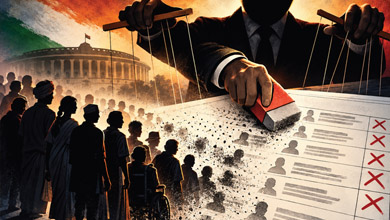
O my people, do not utter a single word; because speaking here has been prohibited.
Sleep peacefully and do not wake up at all; for only those who sleep (those who do not react) have ever succeeded here.
Step back as much as possible from everything that leads you forward and guides you toward progress.
By denying the right to vote, participation in governance is eliminated. This is because democracy is a system of the people, by the people, and for the people. Irrespective of caste, religion, gender, or financial status, all citizens possess equal rights. Denying the right to vote is contrary to the equality envisioned by the Constitution. Voting is the most powerful means to express agreement or disagreement with the policies of the government. With its removal, the political voice of the citizen is silenced.
“Put aside your effort to comprehend and think; for your well-being lies in understanding nothing!”
At the beginning of the 20th century, the people of Iraq, caught in the iron grip of colonial powers, took to the streets against the forces of occupation. The silence of certain cultural figures, including writers and literary personalities, angered the famous Iraqi poet Ma'ruf al-Rusafi. The stanza we read above is a satirical poem composed by him targeting these indifferent cultural leaders.
Recently, the mass deletion of voters' names during the nationwide Special Intensive Revision (SIR) electoral roll updating process has sparked major political controversies. Reports indicate that over 13 crore voters have been excluded from the rolls. Serious allegations persist that Chief Election Commissioner Gyanesh Kumar facilitated the ruling party's victory in recent elections.
An approach that infringes upon the voting rights of the nation's citizens is a matter of utmost gravity. Voting rights are among the most fundamental rights guaranteed to every citizen by the Constitution. By denying the right to vote, participation in governance is eliminated, as democracy is a system of the people, by the people, and for the people. Irrespective of caste, religion, gender, or financial status, all citizens possess equal rights. Denying the right to vote goes against the equality envisioned by the Constitution. Voting is the most powerful means to express agreement or disagreement with government policies. With its removal, the political voice of the citizen is silenced. Ensuring voting rights for all eligible individuals is essential to guarantee free and fair elections. If a name is omitted or rejected from the voter list for any reason, citizens have a legal right to rectify it through the Election Commission. Denying these rights is precisely what is being implemented here through Gyanesh Kumar.
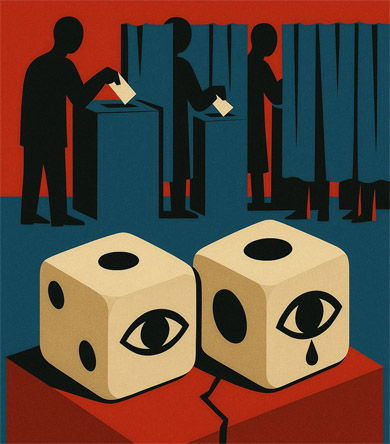
This is the time to open the eyes of those in power through strong agitation and protests. Indifference and passivity at this juncture would be the greatest crime committed against the nation. Students and youth are engaged in efforts to reclaim the soul of the nation through fierce struggles. Even in this, there is no doubt that the sharp words of the Iraqi poet Ma'ruf al-Rusafi regarding those who remain indifferent and reluctant will cut to the bone.
The Mission and Approach of the Election Commission
The Election Commissioners are the heads of the Election Commission of India, which serves as the guardian of the democratic process in India. This body consists of a Chief Election Commissioner and two Election Commissioners. Their most important mission is to ensure free and fair elections in the country. In India, the world's largest democracy, it is their responsibility to create an environment where people can exercise their right to vote without any fear. Theirs is a constitutional position of very high and independent status. They possess full authority to make impartial decisions without any political or administrative interference.
Election Commissioners hold salary and status equivalent to Supreme Court judges. All three members of the commission possess equal authority in decision-making. Therefore, the mission of the Election Commissioners is essential to maintaining the public's faith in the electoral process and upholding democratic values. The Chief Election Commissioner committed a despicable attempt to gain power for a sect of communal politics by abusing this grand status entrusted by the nation. It is the flame of that protest which is blowing fiercely across the entire country.
The Dissenting Views Ignored by Gyanesh Kumar
Against the unilateral decisions of Chief Election Commissioner Gyanesh Kumar, the other two Election Commissioners, Sukhbir Singh Sandhu and Vivek Joshi, officially recorded their dissent 14 times within a span of 10 months. Most of the major dissents were related to the Special Intensive Revision process, which affected nearly 13 crore voters. Despite all three members of the Election Commission having equal authority in making decisions, Gyanesh Kumar adopted an arbitrary approach.
Major Dissents of the Commissioners
• Unauthorized Changes in Form 6: The Commissioners dissented, stating that modifying Form 6 (used for new voter registration) without legal amendments to demand additional details, such as including the names of parents or grandparents from previous electoral roll revisions—was unauthorized and illegal.
• Centralization of Voter Database: They opposed the complete centralization of the voter database via the IT division. They argued that this stripped away the statutory powers held by field-level officers (Electoral Registration Officers - EROs) regarding the addition and deletion of voters.
• Decisions Without Knowledge or Consent: The Chief Commissioner implemented several crucial decisions without informing or seeking the approval of the other two Commissioners. This constitutes a violation of the 2023 law requiring Election Commission decisions to be unanimous.
• Unauthorized Appeals in West Bengal: Hundreds of thousands of appeals were filed in West Bengal under the name of the Election Commission against voters whose names had been restored to the voter list, all done without the knowledge or consent of the other two Commissioners.
• Software Glitches and Voter Omission: Eligible voters were excluded due to changes in the centralized software (ECINet). They also highlighted that despite a Supreme Court ruling in Goa, the names of 97 eligible voters could not be restored owing to flaws in the software.
• Withholding Information: They recorded their dissent regarding the lack of timely access to agendas and minutes of official meetings, as well as the actions of officials such as the Director General of IT, who operated in a manner that restricted the presence and involvement of other members of the Commission.
There is no doubt that all these dissents are entirely justified and represent a voice raised for civil rights. The two Commissioners, who worked with a commitment to upholding the democratic framework, made strong interventions to protect the fundamental rights enshrined in the Constitution of India.
The Politics of SIR
History records that Hitler led Germany toward the blood-freezing concentration camps of genocide following a meticulously planned demographic census. Upon coming to power in January 1933, Hitler announced a comprehensive national census that same year. This national census specifically targeted nearly 6 million Jews. The extensive civil registry designed to capture all necessary data with precision was developed by IBM, an American technology giant.
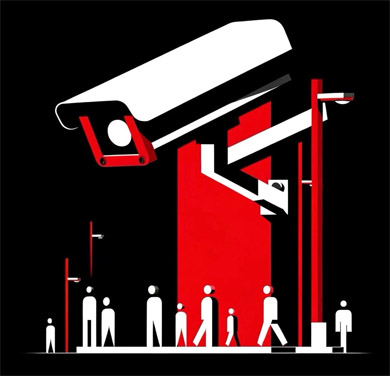
In a similar manner, through the extensive use of technology, the current dispensation in India is encroaching upon citizens' personal data and privacy, gradually steering the country toward racial and communal polarization. Aadhaar was one such project launched in India, becoming one of the world's largest data collection initiatives. Although rejected by courts on several occasions, this system, which reduces every citizen to a single identifier, remains mandatory for government services even today.
This is precisely why every citizen in the secular fold views the approach of today's Election Commission with deep concern. Currently, even the application provided to update Election Commission details requires individuals to submit their family lineage to the Indian government. In an era where numerous studies have proven technology to be the most modern tool of authoritarianism, all of this demonstrates that political vigilance alongside precise technological knowledge and awareness is vital. This factor is also what prompted the other Commissioners to question the SIR system announced and implemented by the Chief Election Commissioner.
It is through the extensive use of technology that the new dispensations in India are encroaching upon citizens' personal information and privacy, gradually steering the country toward racial and communal polarization. Aadhaar was one such project launched in India, becoming one of the world's largest data collection initiatives. Although rejected by courts on several occasions, this system, which reduces every citizen to a single identifier, remains mandatory for government services even today.
Citizenship amendment laws and the legislation being enacted in the country targeted against minorities convincingly demonstrate an aim toward racial and ethnic cleansing. Contemporary circumstances make it evident that the Election Commissioner is becoming a primary tool utilized by the ruling class for this purpose. Opposition parties strongly allege that there exists a secret understanding and an unholy nexus between Indian Chief Election Commissioner Gyanesh Kumar and the BJP. These controversies have emerged in connection with the mass deletion of crores of voters from the country's voter lists. Present conditions also reveal that the ruling parties are struggling to objectively refute the major allegations raised by the Opposition. The allegations of the Opposition parties are extremely grave:
• The Deal Behind the Voter Deletions: The INDIA bloc, including the Congress, alleges that the Election Commission's action of removing 130 million voters from the list was intended to assist the BJP in elections. The allegations specifically highlight that this deletion targets sections unlikely to vote for the BJP, and that Gyanesh Kumar is acting as their agent to subvert democracy.
• Jiji Thomson's Crucial Revelation: The revelation made by former Kerala Chief Secretary Jiji Thomson lends further weight to these allegations. Jiji Thomson revealed that in 2016, while Gyanesh Kumar was serving as an IAS officer, he had asked Thomson to contest the Lok Sabha elections on a BJP ticket and even offered him a Union Cabinet minister position. The Opposition points to this as proof that Gyanesh Kumar has long had political dealings with the BJP.
• Internal Dissent and Unilateral Decisions within the Commission: There is also an opinion that Gyanesh Kumar taking key decisions while ignoring the other Commissioners within the Commission points to a nexus with the BJP. Opposition parties have come forward with allegations that voter deletions in constituencies where prominent leaders contested or lost influenced the election outcomes. Below are the key details that have emerged in this regard:
Figures from Key Constituencies and Political Allegations
• New Delhi Constituency (Delhi): In the New Delhi constituency, where Arvind Kejriwal lost by a narrow margin in the Delhi Assembly elections (February 2025), there are allegations of large-scale voter deletion. Media reports indicated that between 33% and 40% of the voters who were newly added to the voter list just before the election (December 2024–January 2025) were subsequently removed from the draft list that followed. This even included visually impaired students residing at an institution.
• West Bengal: Analyses have surfaced indicating that in approximately 150 assembly constituencies in Bengal, the number of votes deleted from the voter list exceeds the winning margin of the victorious candidates. The Opposition alleges that minority voters were excluded on a large scale in constituencies like Nandigram.
• Karnataka: Chief Minister D. K. Shivakumar alleged that over 50 lakh (5 million) voters' names disappeared from the voter list in Karnataka alone. The state administration alleges that BJP supporters widely misused Form 7 to delete votes by targeting voters, particularly from minority, backward, and Dalit communities.
• Madhya Pradesh (Indore): Reports emerged that over 1.36 lakh voters were excluded from the voter list in Indore district alone, and election officials admitted that they had no digital records or evidence of these deletions in their possession.
Even when the Election Commission fixed the election on a Friday in Kerala, the public recognized the saffron politics within it. Hearing the declaration of the Imams who reminded that nation-building is the duty of Muslims, the Muslim community prepared to participate in the election process despite the difficulties.
In Kerala, ahead of the 2026 Assembly elections, the first-stage draft list of the SIR process showed that over 24 lakh names were excluded. This led to major political disputes and court interventions. Subsequently, on a petition filed by opposition leaders, the Supreme Court ordered the accurate publication of the details of those who were excluded.
Following precise hearings and verifications, the final voter list released in February showed that a total of 53,229 voters were ultimately removed across the state (including deceased individuals, those who shifted residences, and duplicate entries). In Ernakulam district alone, 3,058 voters were excluded from the final list across various constituencies.
Genocide in SIR
'2019 Lok Sabha Elections: Among 12.7 crore people whose names disappeared from the voter list, 3 crore were Muslims and 4 crore were Dalits', this was a headline published on the website of 'The National Herald' newspaper at the time. Although the Muslim population comprises just over 14 percent of the total population, Muslim names made up 25% of those missing from the voter list. This means that in a family with four voters, the name of at least one person was bound to be missing from the list. A study by Khalid Saifullah, a Hyderabad-based software professional who developed the 'Missing Voters' app, is cited in the aforementioned report.
Two days prior to the Parliamentary elections held in April–May 2019, it was revealed that up to the end of February, the names of 15 percent of the country's total voters, comprising 25% Muslims and 20% Dalits, had been removed from the electoral roll. Requests made from mosques to believers to check if their names appeared on the voter list spread fear and panic among the people. They realized that behind these missing names lay a conspiracy to disenfranchise Muslims and Dalits. They calculated that the goal of Hindutva politics is the marginalization and, if possible, erasure of Muslims from the Indian political landscape. The motive behind conducting Lok Sabha elections in certain Muslim-majority constituencies during the month of Ramadan was likewise the elimination of the community from electoral politics. Even when the election was scheduled on a Friday in Kerala, the public recognized the saffron politics within the Election Commission. Hearing the declaration of the Imams who reminded that nation-building is the duty of Muslims, the Muslim community prepared to participate in the election process despite the difficulties.
Abusaleh Shariff, founder of the Delhi-based 'Centre for Research and Debates in Development Policy', explained as follows: 'Indians in general have been excluded from the voter list on a large scale. However, the proportion of Muslims among them is very high. This is growing into a dangerous situation that turns our democracy into a farce. It is estimated that approximately 15 to 18 crore Indians have been excluded from the electoral rolls. That is equivalent to excluding an entire nation or a hundred small nations. This itself is a shame to India. Regarding Muslims, what I am saying is that in 50% of households in a state, at least one person eligible to vote does not have a vote. Although we started from Karnataka, preliminary work is underway in states like Gujarat, Telangana, Andhra Pradesh, and Tamil Nadu. This is certainly a matter of serious concern.'
It also details the incident during the 2017 elections in Gujarat where the names of lakhs of Muslims were removed from the voter list in at least 16 Assembly constituencies. Figures indicate that in Godhra, Gujarat, out of more than 1,800 households, there was only one voter listed per house. 'Frontline' reported as follows: 'If you are a member of a Muslim family of four voters in Uttar Pradesh, the right to vote granted by Article 326 of the Constitution is likely to be available to only three people. The fourth person's name will either have been omitted or gone missing from the voter list. Efforts can also be seen to reduce Muslim representation by designating Muslim-majority constituencies as reserved constituencies.' Analyses have pointed out that these serve as ample evidence that the Election Commissioner is acting in accordance with the interests of the ruling party.
Translated By: Dr.Minha Subair