


Modern Sufism: An Old Idea in a New Garb
✒ Zainab Binth Farhan
19 October 2026, 8 Jumada al-Awwal 1448 AH

There was a time when one had to visit a khanqah to become acquainted with Sufism. One had to sit in the presence of a shaykh, join a tariqah, receive a wird, or visit the maqam of a wali.
But times have changed. Through social media, “spirituality” has reached our fingertips! A few lines attributed to Rumi, short videos about Allah’s love, “spiritual messages” accompanied by music, and ideas such as “love is more important than the rigidity of religion,” “the heart matters more than religious laws,” and “all religions are paths leading to the same truth” are now widely circulated. Today, a person can encounter a new form of Sufi spirituality without joining any traditional tariqah.
This is one of the striking characteristics of contemporary Sufism. From the khanqah to social media, from the shaykh’s gathering to audio-visual platforms, and from traditional tariqahs to individualised spirituality, Sufi ideas continue to travel in new forms. Contemporary interpretations of Sufism are reaching new generations through the internet, social media, music, and cultural events.
In the old Sufi tradition, the principal centre of spiritual training was the relationship between the shaykh and the murid. Spending long periods in the shaykh’s company, receiving dhikrs, awrad, and spiritual exercises from him, and joining a silsilah were all part of this tradition.
Today, the same world of ideas has access to new media. One can listen to a shaykh’s lectures without sitting beside him for years. One can participate in online spiritual gatherings without visiting a khanqah. One can embrace the ideas of a tariqah without formally becoming a member.
As a result, a new form of Sufism is emerging: a murid without a direct relationship with a shaykh, a follower who has not formally joined a tariqah, and a spiritual seeker who never visits a khanqah but embraces Sufi terminology, literature, and spiritual ideas. This is the situation today, and young people are particularly attracted to it.
Rumi’s Poetry
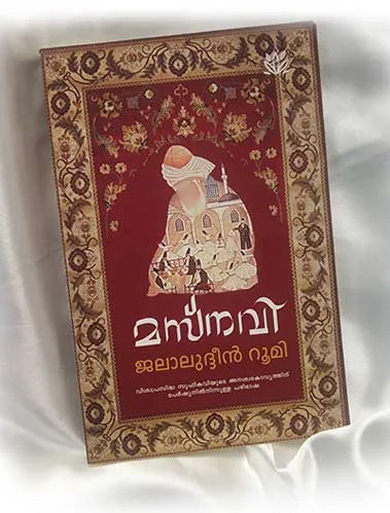
One of the most prominent examples of the contemporary popularity of Sufism is Jalaluddin Rumi. His poetry occupies an important place in the history of Persian Sufi literature. A few lines attributed to Rumi circulate widely on social media, primarily addressing themes such as love, the soul, peace, light, and human relationships.
A significant transformation takes place here. A Sufi thinker is presented as a poet of universal spirituality. The specifically Islamic elements of his thought are set aside, and a few universally appealing expressions are selected to construct an entirely new spiritual philosophy.
Studies of modern presentations of Sufism in the Western world reveal this transformation more clearly. Certain tendencies have emerged in some modern interpretations of Sufism, including religious syncretism, the concept of an eternal truth, the inner unity of religions, and a form of spirituality detached from outward religious laws. We must understand that the new spiritual philosophy constructed in Rumi’s name has no connection with authentic Islam.
The claim that one must read Rumi’s Masnavi to know Allah, the Lord of the universe whose love is described in the Qur’an, and that Rumi is the supreme spiritual master is un-Islamic. This is because Rumi is presented as saying that the Allah we seek is within us. In other words, the claims “You are me” and “You and I are one” are contrary to Islam.
Rumi says:
“I searched for Allah, but found nothing except myself. I searched for myself, but found nothing except Allah.”
“If you cannot find me within yourself, you will never find me.”
The claim that the Creator and creation are one and the same, a form of monism, is fundamentally opposed to Islam. No one who understands Islam through its authentic sources can accept such a claim, no matter how attractively it is presented.
“No Religion, Just Spirituality!”

This is an idea that has gained popularity in the modern world. It involves identifying oneself as “not religious, but a spiritual seeker.” The idea is that religious laws are unnecessary, but belief in God is desirable; the obligations of worship are unnecessary, but spiritual peace is needed; the details of the Sharia are unnecessary, but love for Allah is important.
Here, we need to understand the fundamental nature of Islam. In Islam, spirituality and the Sharia are not contradictory. Salah is not merely a physical movement; it is also an act of worship performed with the presence of the heart. Fasting is not merely abstaining from food and drink; it is an act of worship intended to cultivate taqwa, or God-consciousness. Dhikr is not merely the repeated movement of the tongue; it is an act of worship that connects the heart to Allah.
In Islam, spirituality is not a means of escaping the Sharia. Rather, it is a path to purifying the heart while remaining within the framework of the Sharia.
“Love Matters Most, Not Laws!”
This is another argument sometimes heard in modern presentations of Sufism. According to this approach, love for Allah is what matters, while laws and rulings are secondary to it. However, the Qur’an does not separate love from obedience.
Allah says:
“Say, ‘If you truly love Allah, then follow me; Allah will love you and forgive your sins.’” (Qur’an 3:31)
When Allah informs us through the Noble Qur’an that following the Prophet ﷺ is the proof of our love for Him, and that Allah will love us and forgive our sins through this obedience, what place can there be in Islam for those who claim that the laws and rulings taught through the Prophet are unnecessary?
It is not enough to say, “I love Allah.” That love must be expressed through obedience.
A person who loves Allah cannot disregard His commands. Likewise, someone who loves the Prophet ﷺ cannot bypass his Sunnah and seek an independent spiritual path of their own invention.
“All Religions Lead to the Same Truth!”
Another major idea in contemporary universal spirituality is the claim that all religions are different paths leading to the same ultimate truth. It sounds highly appealing. Many people consider it an idea that could help reduce conflicts among human beings.
Islam teaches us to treat people of other faiths with justice and kindness. It teaches us to protect their rights and refrain from injustice. However, it does not teach that the beliefs of all religions are equally true. Allah states unambiguously:
“Indeed, the religion in the sight of Allah is Islam.” (Qur’an 3:19)
“Whoever seeks a religion other than Islam, it will never be accepted from him.” (Qur’an 3:85)
A Muslim must treat people of other faiths with respect, deal with them justly, and offer them humanitarian assistance. However, this does not require compromising one’s own beliefs. We must be able to do all these things while remaining good Muslims.
The Image of the “Moderate Muslim”
This brings us to another relevant discussion concerning contemporary Sufism. In modern political and social discourse, Sufism is sometimes presented as a symbol of peace, tolerance, moderation, and cultural refinement. In contrast, Salafiyyah is sometimes portrayed as a symbol of rigidity and intolerance. Is this a natural conclusion, or is it a particular ideological construction that has emerged in modern times?
Studies of contemporary Sufism point out that, in the period following 9/11, some Muslim countries and Western political circles presented Sufism as a peaceful force against violent extremism. The point is not that Sufism is not peaceful. Rather, the simplistic equation “Sufism equals moderation” cannot substitute for historical analysis.
Historically, Sufism was not a single, uniform phenomenon. It included zuhd, or ascetic detachment from worldly pleasures; spiritual mysticism; tariqahs; grave-centred practices; philosophical doctrines; and different social and political positions across various historical periods.
Why Are Young People Attracted to It?
It would be an oversimplification to claim generally that today’s youth are experiencing a profound spiritual emptiness. Nevertheless, it is a reality that young people grapple with questions about the meaning of life, identity, loneliness, relationships, the future, the pressure to succeed, and thoughts about death.

They want to know Allah. They seek peace of heart. They want meaning in life. They want freedom from sin. They need love and hope. On social media, content that appears to answer these needs naturally attracts the most attention.
Beautiful words, poetry, music, stories of spiritual experiences, messages about compassion, and expressions of Allah’s love can all naturally appeal to the heart. However, there is a danger here. Where emotions are easily satisfied, knowledge is often left behind.
A one-minute video may touch the heart, but it may not teach aqeedah, or Islamic creed. A beautiful poem may bring tears to the eyes, but it may not teach the Sunnah. A spiritual lecture may provide peace of mind, but that does not mean all the ideas it contains conform to the Qur’an and Sunnah. This is why young people must be provided with knowledge alongside emotional inspiration.
The Salafi Manhaj Does Not Reject Spirituality
A major misconception about the Salafi manhaj needs to be corrected. The Salafi manhaj is not opposed to spirituality. It is not opposed to purification of the heart, love for Allah, ihsan, repentance, or dhikr. On the contrary, it affirms that all these are essential components of Islam.
Purifying the heart requires the Qur’an. Dhikr requires the Sunnah. Love requires obedience. Repentance requires ikhlas, or sincerity. Spiritual experiences require evidence. Ihsan requires the example of the Prophet ﷺ. This is the Salafi approach.
Understanding Ihsan
In a hadith, the Prophet ﷺ defined ihsan as follows:
“To worship Allah as though you see Him, and although you do not see Him, He certainly sees you.”
This is the foundation of Islamic spirituality. Remember Allah even when you are alone. Maintain the awareness that He sees and knows the form, manner, and intention of your worship. When you have an opportunity to commit a sin, refrain from it by remembering that Allah sees you. Connect your heart to Allah during Salah. When reading the Qur’an, recognise that it is the speech of your Lord. Rise at night when everyone else is asleep, perform Salah, and turn to Allah in heartfelt repentance and supplication.
None of this requires a special mystical experience. It does not require a shaykh’s kashf, or unveiling of the unseen. It does not require membership in a tariqah. A sincere relationship with Allah is enough.
What Should We Offer the Younger Generation?
The question of what we can offer the younger generation as they move towards liberal ideas and Sufi concepts is particularly relevant here.
We must invite them to the Qur’an and the way of the Prophet ﷺ. We must teach them the Names and Attributes of Allah. We must help them develop the habit of making daily supplications and engaging in dhikr. We must introduce them to the sweetness of Tahajjud and help them understand the beauty of repentance. We must give them hope in Allah’s mercy, nurture awareness of death and the Hereafter in their hearts, explain the importance of keeping good company, open the doors of knowledge to them, and teach them what ihsan means.
Only then will they be able to distance themselves from the misguided modern idea that “spirituality is necessary, but religion is not.” Transforming those who have received little or none of this guidance from an early age is not an easy task.
Zuhd Is Not Escapism
The zuhd practised by the early Muslims was not what these people claim it to be. Their zuhd involved religious devotion, such as avoiding excessive attachment to worldly life, remembering the Hereafter, engaging in more acts of worship, and repenting to Allah.
The institutionalised form of tasawwuf that developed later in history was something different. Tariqahs, silsilahs, special awrad, shaykh-murid structures, grave-centred practices, ideas concerning kashf and ilham, and various philosophical doctrines appeared in its different forms.
This Is Islam
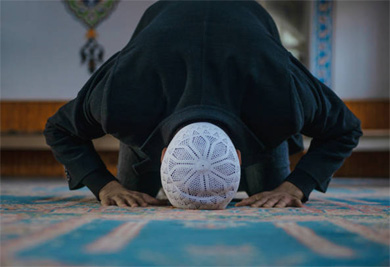
Sufism may have adopted a new appearance today. Social media may have replaced the khanqah, famous speakers may have taken the place of shaykhs, and poetry and music may have assumed new forms. Yet the fundamental question remains unchanged: “What is the correct path to draw closer to Allah?”
The answer of Islam is clear: the Qur’an, the Sunnah, Tawheed, ihsan, and the methodology through which the Salaf understood all of these.
We need the spirituality taught by the Prophet ﷺ and the tazkiyah, or purification of the soul, taught by the Qur’an and Sunnah. Love for Allah must be demonstrated through obedience to His Messenger. We do not need meaningless forms of dhikr; we need the forms of dhikr taught by the Messenger ﷺ.
The Prophet ﷺ said:
“My entire Ummah will enter Paradise except those who refuse.”
The Companions asked, “O Messenger of Allah, who would refuse?”
He replied, “Whoever obeys me will enter Paradise, and whoever disobeys me has refused.”
“Whoever obeys the Messenger has indeed obeyed Allah.” (Qur’an 4:80)
It is narrated from Ibn Abbas (RA) that while delivering a sermon to the people during the Farewell Hajj, the Prophet ﷺ said:
“O people, I am leaving behind something among you. As long as you hold firmly to it, you will never go astray. It is the Book of Allah and my Sunnah.” (Al-Hakim)
“O you who believe, obey Allah and obey the Messenger and those in authority among you. If you disagree over anything, refer it to Allah and the Messenger, if you truly believe in Allah and the Last Day. That is better and gives the best outcome.” (Qur’an 4:59)
“Indeed, in the Messenger of Allah you have an excellent example for whoever hopes in Allah and the Last Day and remembers Allah often.” (Qur’an 33:21)
We can find the Sunnah of the Prophet ﷺ in every sphere of life. Even in areas we consider insignificant and tend to neglect, the Sunnah of the Prophet provides clear guidance.
Salman (RA) was once asked by a Jewish man, “Has your Messenger taught you everything, even the etiquette of relieving yourselves?” He replied, “Yes. He has forbidden us from facing the Qiblah while relieving ourselves, from cleaning ourselves with fewer than three stones, and from using dung or bones for cleaning.” (Muslim)
This is Islam. If someone invents a spiritual path that was unknown to the Prophet ﷺ and his Companions, how can it be considered part of Islam? How can someone who rejects the acts of worship taught by Islam and goes about singing songs of love and devotion be considered a Muslim?
We must draw closer to Allah. The way to do so is not through the kashf of some shaykh, but through the Sunnah of the Prophet ﷺ. There is no need to seek a new path within Islam in the name of spirituality. The Qur’an and the Sunnah have already explained that path clearly.
Translated By: Raihan Shaheed