


The Houthis’ Reach Extends Towards Makkah
✒ Raihan Shaheed
2 October 2026, 0 21 Rabi al-Thani 1448 AH
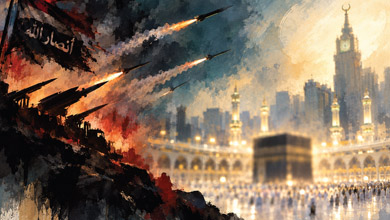
Makkah: A thousand thoughts rush to mind: the Kaaba, Masjid al-Haram, the Qibla, Hajj, Umrah, Prophet Ibrahim (peace be upon him), Prophet Muhammad ﷺ... a place toward which the hearts of hundreds of millions of Muslims living across various parts of the world turn in unison. The mere news of an armed drone advancing toward the skies of such a city is profoundly shocking.
Today's Houthi movement grew out of the Zaydi Shia community in northern Yemen. Zaydisim is a Shia tradition that has existed in Yemen for centuries. Until the end of the Zaydi Imamate in Yemen in 1962, it held significant influence over the political life of northern Yemen.
On September 15, 2026, authorities announced that the Saudi Air Defense Forces intercepted and destroyed a drone heading toward the southern part of Makkah. The drone was intercepted before it could enter Makkah's restricted airspace. Turki Al-Malki, spokesman for the Saudi-led Coalition Forces, described this as the Houthis' second attempt targeting Makkah, with the first being a ballistic missile attack directed toward Makkah in 2017.
How did a local armed movement in Yemen grow into a major threat to Saudi Arabia's security today? Behind this lies decades of history, a history in which religion, politics, revolution, sectarianism, regional power struggles, and Iranian intervention all intertwine.
The Qur'an speaks regarding the sacredness of Makkah: "Indeed, the first House established for mankind was that at Bakkah, blessed and a guidance for the worlds." (Qur'an 3:96)
Hence, protecting the sanctity of the Kaaba along with the safety and security of Makkah and the believers arriving there is of paramount importance. But who are those advancing with weapons toward that sacred land? To understand them, we must look back to the northern mountains of Yemen. It is from there that the story of the Houthis begins.
Who are the Houthis?
The name 'Houthi' is widely familiar in Middle Eastern politics today. However, a few decades ago, this name was largely unknown to the world outside Yemen's Saada province. Their official name is 'Ansar Allah'. Meaning 'Supporters of God', this name itself signifies their religio-political character.
Today's Houthi movement grew out of the Zaydi Shia community in northern Yemen. Zaydism is a Shia tradition that has existed in Yemen for centuries. Until the end of the Zaydi Imamate in Yemen in 1962, it held significant influence over the political life of northern Yemen.
Zaydism and the Imami or 'Ithna Ashariyya' Shia tradition, which is the majority in Iran, are not the same. Zaydis do not accept the concept of Twelve Imams. Nor do they accept the doctrine of the infallibility of the Imam in that same form. Historically, Zaydism held certain closer affinities with the Sunni tradition. However, it is from this point that the history of the Houthi movement becomes more complex.
Describing today's Houthi movement merely as "traditional Zaydism" fails to capture its political and ideological transformation. The revolution that took place in Iran during the late 1970s and 1980s influenced certain Zaydi religio-political circles in Yemen as well. Efforts to revive the Zaydi tradition gained momentum, and it was against this backdrop that Badr al-Din al-Houthi and his son, Hussein al-Houthi, emerged. The Al-Houthi family was associated with the "Believing Youth," a religious educational movement formed in the 1980s. Later, under the leadership of Hussein al-Houthi, this movement became increasingly politicized and gravitated toward armed conflict.
In 2004, armed conflict erupted between the Yemeni government and followers of Hussein al-Houthi. Although Hussein al-Houthi was killed, the movement did not end. His brother, Abdul-Malik al-Houthi, subsequently emerged as the primary leader of the movement. Between 2004 and 2010, six rounds of war were fought between the Yemeni government and the Houthis.
When a society's religious deviation adopts the language of political revolution, the dynamics shift. It gains organizational structure. Subsequently, it acquired weaponry. Then comes the ambition to seize power. Ultimately, religious ideology, political authority, and military force coalesce within a single movement. This is precisely what transpired in the history of the Houthis. Therefore, understanding the Houthis simply as "Yemenis backed by Iran" falls far short of reality.
Here, a local religious movement was gradually transforming into a political movement. Subsequently, it became an armed militia. Later, it evolved into a force capable of seizing control of a nation's capital. Ultimately, it reached a state where it could threaten neighboring countries shipping traffic through the Red sea using ballistic missiles and drones. How did this transformation occur? The answer must be sought within the Houthis' ideological evolution.
From Zaydism to Houthi Ideology
The most vital key to understanding the Houthis lies in their ideological transformation, as the movement originated from a religious revivalist cause. Several factors drove the ideological anxieties brewing within northern Yemen's Zaydi community. The 1962 revolution brought an end to the Zaydi Imamate, dismantling a religio-political system that had endured for centuries. In its wake, efforts to preserve the Zaydi religious heritage intensified. Concurrently, they began viewing the growth of Salafi dawah as a direct challenge.
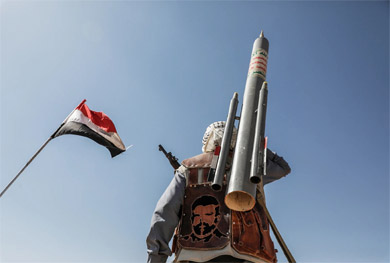
Here is where movements like the previously mentioned "Believing Youth" took shape. However, during the era of Hussein al-Houthi, matters moved in a distinctly different direction. A revolutionary political rhetoric emerged, conflating American influence, Israel, Saudi Arabia, and the Yemeni regime. It is particularly essential to recall here that divergent schools of thought existed within Zaydism itself. Not all Zaydis are Houthis, nor do all Zaydis endorse Houthi ideology. Within the Houthi movement, however, certain more radical Zaydi political and religious interpretations gained momentum. In particular, studies concerning the Jarudiyya branch of Zaydism highlight that its positions regarding early Islamic political leadership shared major similarities with Ithna Ashariyya Shia Islam. The Jarudiyya's stances regarding Abu Bakr رضي الله عنه, Umar رضي الله عنه and Uthman رضي الله عنه, differ markedly from traditional Sunni beliefs.
Here is where the issue of creed merges with the issue of politics. When a society's religious deviation adopts the language of political revolution, the situation changes dramatically. It gains organizational structure. Subsequently, it acquired weaponry. Then comes the ambition to seize power. Ultimately, religious ideology, political authority, and military force coalesce within a single movement. This is precisely what transpired in the history of the Houthis. Therefore, understanding the Houthis simply as "Yemenis backed by Iran" falls far short of reality. Stating merely that "they are Zaydis" is equally inadequate. Their history certainly contains Zaydi heritage, but alongside it lies a revolutionary politics that reinterpreted that tradition, further propelled by the Iranian influence that later intensified. It is the confluence of all these factors that shaped the Houthi movement of today.
In the Shadow of the Iranian Revolution
One of the decisive turning points in Houthi history was the influence of the Iranian Revolution. The revolution that occurred in Iran in 1979 overturned a regime. It represented a new model that utilized the language of religion to construct a revolutionary political system, subsequently seeking to export it beyond the nation's borders.
The Islamic Republic of Iran subsequently established ties with various armed political organizations across the Middle East. Through training, weaponry, financial aid, and military advice, these links gradually strengthened. The Quds Force of Iran's Islamic Revolutionary Guard Corps (IRGC) served as the primary instrument for cultivating such relationships. While the Houthis possess distinct Yemeni roots, the ideas, political rhetoric, and military models of the Iranian Revolution undeniably exerted a profound influence on their subsequent development.
Over the past decade and a half, Iranian support proved decisive in enhancing the military capabilities of the Houthis. Numerous studies document that the Houthis received backing from Iran across key domains, including weaponry, training, intelligence assistance, drone and missile technology.
The 2026 assessment by the Council on Foreign Relations (CFR) characterizes Iran as the primary international patron of the Houthis, documenting that the group received weaponry, training, and intelligence support via the IRGC. Consequently, the evolution of the Houthi movement can be viewed in three distinct phases:
• Phase One: Zaydi religious revivalism in northern Yemen.
• Phase Two: Its subsequent politicization and militarization.
• Phase Three: The establishment of deep military and political ties with Iran, transforming the movement into a regional power.
It is this third phase that holds particular significance for understanding the drones that today reach the skies over Makkah.
Iran, Hezbollah, and the Houthis: Different Manifestations of the Same Model
Following the 1979 Iranian Revolution, Iran strengthened its ties with Shia factions in Lebanon. During the 1980s, the Iranian Revolutionary Guard Corps played a decisive role in the formation, training, and arming of Hezbollah. Subsequently, Hezbollah evolved into one of Iran's most powerful regional allies.
The Iranian regime subsequently established ties with various armed political organizations across the Middle East. Through training, weaponry, financial aid, and military advice, these links gradually strengthened. The Quds Force of Iran's Revolutionary Guard served as the primary instrument for cultivating such relationships. While the Houthis possess distinct Yemeni roots, the ideas, political rhetoric, and military models of the Iranian Revolution undeniably exerted a profound influence on their subsequent development.
The integration of religious ideology, social organization, political action, and armed force provided Iran with a strategic advantage. Rather than deploying its own military to fight directly in every arena, the strategy focuses on empowering a movement deeply rooted in local realities, offering ideological backing, supplying weapons and training, and transferring technology. Subsequently, that movement grows into a formidable armed and political force within its own nation. Experts studying the relationships Iran has cultivated with such organizations frequently employ the term "proxy.”
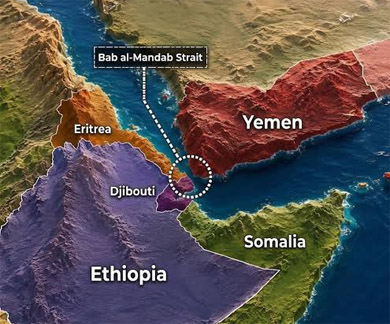
Here lies a critical geopolitical calculation. Saudi Arabia is one of Iran's primary rivals. The presence of a powerful, Iran-linked armed movement right along Saudi Arabia's southern border delivers a strategic advantage to Iran. Furthermore, Yemen's geographic position must be taken into account. The Bab-el-Mandeb Strait, situated between the Red Sea and the Arabian Sea, is one of the world's most critical maritime choke points.
A formidable armed organization operating in this region gains immense leverage. It impacts not merely a single nation, but international shipping, energy supplies, regional commerce, Saudi Arabia's security, and the overall stability of the Red Sea.
From Saada to Sanaa: The Journey to Power
When does an armed movement truly become a political power? When a nation's capital falls under its control. In the history of the Houthis, that moment arrived in 2014. The protests of the 2011 Arab Spring paved the way for sweeping political shifts in Yemen as well. Ali Abdullah Saleh, who had held power for decades, stepped down. A political transition process was initiated under the leadership of Abdrabbuh Mansur Hadi. However, Yemen's political crises were far from over. The Houthis continued to expand their influence across northern Yemen. Capitalizing on widespread dissatisfaction with the political transition and utilizing their military force, they seized control of increasingly large territories.
In September 2014, Houthi forces entered Sanaa, subsequently bringing the capital under their control. Here, the Houthis also secured a major political alliance. They formed a temporary coalition with the loyalists of former President Ali Abdullah Saleh. Forces that had once fought fiercely against each other now united against a common political adversary. In January 2015, the Houthis seized the presidential palace and key government institutions. Hadi was pressured to resign. Later escaping from Sanaa, he reached Aden, from where he formally requested an international intervention from Saudi Arabia. Meanwhile, the Houthi advance continued southward, targeting Aden itself. With this, the conflict transcended the bounds of an internal political dispute.
Right along Saudi Arabia's southern border, an armed movement with deep ties to Iran captured Yemen's capital. From Saudi Arabia's perspective, this was far from a routine Yemeni political issue. Matters of border security, regional balance of power, Iran's expanding influence, and the safety of the Red Sea and the Bab-el-Mandeb Strait, all converged at once.
Meanwhile, the territories under Houthi control expanded, and the power of the Yemeni government collapsed. An armed movement that had grown with Iranian backing assumed control over a vast portion of the country. Saudi Arabia was then confronted with a defining choice: to stand by and watch passively, or to intervene militarily in Yemen. In March 2015, the world witnessed its answer.
The Saudi-led coalition initiated military operations in Yemen, marking the beginning of a new chapter of direct conflict between the Houthis and Saudi Arabia. Did the Houthis become enemies of Saudi Arabia merely over a border dispute? Far from it! Behind this hostility lay Yemen's internal struggle for power, the regional rivalry between Iran and Saudi Arabia, the revolutionary ideology of the Houthis, and their rapid military growth.
Why Did Saudi Arabia Intervene in Yemen?
When the Houthis seized control of Sanaa in 2014, Yemen's political crisis entered a critical new phase. The armed movement was now in possession of the nation's capital, while the power of the internationally recognized government was actively collapsing. Concurrently, the Houthis pressed forward with their military advance toward the south.
As noted earlier, when the Houthis advanced toward Aden, Hadi appealed to Saudi Arabia for assistance. Consequently, in March 2015, a coalition of Arab nations led by Saudi Arabia launched military operations in Yemen. The objective was to halt the Houthi advance and restore the recognized Yemeni government. A scenario was unfolding wherein Iranian influence had reached right up to Saudi Arabia's southern border. Here, Saudi Arabia's security concerns must be understood. When a hostile armed organization gains strength just across a nation's border and acquires long-range missiles and drones, it naturally evolves into a grave national security threat.
Subsequent years proved that this concern was no mere speculation. The Houthis launched ballistic missiles and drones against Saudi Arabia. Attacks targeting Saudi airports, military installations, and oil infrastructure were widely reported. Thus, the war in Yemen spilled across Saudi Arabia's borders. It is within this context that the 2017 ballistic missile trajectory toward Makkah assumed particular significance. Saudi Arabia stated that the missile targeted Makkah and announced that its air defenses had intercepted it. With the events of last week, those lingering apprehensions have once again resurfaced.
The Houthis possess distinct Yemeni roots. However, the ideas, political rhetoric, and military models of the Iranian Revolution undeniably exerted a profound influence on their subsequent development. Numerous studies document that the Houthis received backing from Iran across key domains, including weaponry, training, intelligence assistance, and drone and missile technology. The 2026 assessment by the Council on Foreign Relations characterizes Iran as the primary international patron of the Houthis, documenting that the group received weaponry, training, and intelligence support via the IRGC.
What is our belief regarding the sanctity of Makkah? Is it merely an ordinary city? The Qur’an (5:97) states that Allah has made the Sacred House of the Kaaba a foundation and sustenance for mankind. Therefore, any analysis of this conflict that fails to grasp Saudi Arabia's solemn responsibility to protect Makkah, where the Holy Kaaba stands, remains incomplete.
While individual actions in a war may be scrutinized independently, and the suffering of the civilian population in Yemen cannot be ignored, another truth must simultaneously be acknowledged: the growth of the Houthis and their alliance with Iran posed a genuine, undeniable threat to Saudi national security.
The True Face of the Houthis
When discussing the Houthis today, the rhetoric heard most prominently revolves around terms like "resistance," "Palestine," "Gaza," "anti-Zionism," and "anti-Americanism." These slogans form the cornerstone of their international propaganda campaign. Following the outbreak of the war in Gaza after October 2023, the Houthis initiated maritime attacks in the Red Sea against vessels they alleged were affiliated with Israel. They also publicly claimed responsibility for launching missiles and drones directly targeting Israel, asserting that these actions were undertaken in solidarity with the Palestinian cause.
The devotion of Muslims toward Palestine is a tangible reality, and feeling profound anguish over the suffering of Muslims in Gaza is only natural; occupation and injustice must indeed be opposed. However, simply because a movement puts forward a compelling surface argument does not make its underlying ideology correct. The mere fact that a group speaks on behalf of Palestine does not exempt its broader political and religious positions from scrutiny.
When applying such scrutiny to the Houthis, a clearer picture emerges. This is not primarily a pro-Palestinian movement. It is a movement that expanded through armed conflict in northern Yemen. It is a movement that captured Yemen's capital, secured military backing from Iran, developed ballistic missiles and drones, launched numerous attacks against Saudi Arabia, and disrupted international shipping in the Red Sea. How, then, can it be accurately evaluated solely through the single lens of the Palestinian issue?
The Iranian-Backed Houthis
Iran is a nation that has officially adopted Shi’ism, with the concept of the Imamate forming the core foundation of its religio-political system. Shia theology differs fundamentally from the Sunni tradition regarding the early Caliphate and the Companions of the Prophet. The Shia Imamite tradition does not recognize the Caliphates of Abu Bakr رضي الله عنه, Umar رضي الله عنه, and Uthman رضي الله عنه. Furthermore, adherents within this tradition even engage in ritual imprecations against them.
It is a nation rooted in this theological framework that today supplies the Houthis with weaponry, training, and technology. They seized power in Yemen, launched missiles and drones into Saudi Arabia, and now possess the military capability to reach the vicinity of Makkah. That they would target the Two Holy Mosques is something the global Muslim community finds utterly unthinkable. Any force that threatens or weakens Saudi Arabia's solemn responsibility to safeguard these sanctuaries, regardless of the slogans it broadcasts, must be viewed with utmost gravity by Muslims worldwide.
In Syria, Iran supported Bashar al-Assad's regime both economically and militarily for years. In the war that the regime waged against its Sunni-majority population, widespread human rights violations and war crimes have been extensively documented.
Similarly, if a drone launched by the Houthis, who were nurtured and sustained by Iran, has appeared in the skies over Makkah, it cannot be lightly dismissed. Muslims must not be deceived by their political slogans. What should resound in Makkah is not the siren of war, but the proclamation of Tawhid.
Translated By: Dr. Minha Subair