


Bulldozers Over Minarets
✒ Raihan Shaheed
17 October 2026, 6 Jumada Al-Awwal 1448 AH
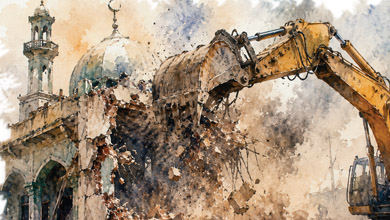
In India in 2026, news that causes concern among the Muslim community has become increasingly routine. A mosque was demolished in Jaipur, Rajasthan. Four mosques were demolished in Barmer. A mosque more than two centuries old in Meerut received an eviction notice. Concerns have arisen over whether a mosque said to be nearly a thousand years old in Varanasi will be demolished. Demolition drives targeting Muslim places of worship have been reported in BJP-ruled states such as Delhi, Maharashtra, Uttar Pradesh, Gujarat, Rajasthan, and Haryana. Such reports are no longer rare incidents but are becoming recurring realities. These developments raise a troubling question among Muslims: Do the country’s administrative institutions, political parties, and media regard them as equal citizens?
The Story Told by the Numbers
Isolated incidents reported through social media and news outlets often conceal a much larger trend. That is why statistics matter. According to some recently published reports, more than 23 Muslim places of worship and religious institutions across various states were reportedly demolished or subjected to eviction proceedings within just 45 days. These included not only mosques but also madrasas, Eidgahs, and dargahs.
In this context, the question of whether the law is being enforced uniformly becomes particularly relevant.
Numerous religious institutions belonging to different faiths have been built without permission or stand on disputed land across various Indian states. However, human rights activists and social observers have raised concerns about whether Muslim places of worship are being disproportionately targeted by demolition drives.
Another noteworthy issue is the public response to these incidents. A few years ago, such developments sparked widespread national debate. Today, however, many incidents disappear from public discussion after receiving a few days of media coverage, while others receive virtually no attention at all.
The problem is not limited to the demolition of a mosque. The real question is whether a situation is emerging in which the concerns and grievances of an entire community fail to reach the attention of the wider public. This is why many social observers view these incidents not merely as land disputes or legal proceedings, but as part of the contemporary Muslim experience in India.
The Law or Selective Enforcement?
In discussions about action against Muslim places of worship, government authorities generally advance legal justifications. Encroachment on land, unauthorised construction, development projects, and court orders are among the reasons frequently cited. In a society governed by the rule of law, such grounds cannot simply be dismissed. The law must apply equally to everyone.
However, in a democratic society, how the law is enforced is just as important as the existence of the law itself. History teaches us that laws have often been applied in discriminatory ways. During racial segregation in the United States and apartheid in South Africa, many injustices were justified as being “legal.” Therefore, describing an action as legal does not, by itself, establish that it is just.
Across Indian cities and villages, religious institutions belonging to all faiths have been built on government land or disputed property. Temples, churches, and other religious institutions that have stood for years in the middle of roads or on public land can be found in many parts of the country.
If Muslim institutions are disproportionately targeted when demolition drives are carried out, suspicions will naturally arise. This concern is not merely an allegation made by Muslim organisations. Numerous human rights activists and social observers have repeatedly questioned whether the law is being enforced uniformly.
In recent years, the term “Bulldozer Politics” has become part of India’s political discourse. Human rights organisations have criticised the demolition of accused persons’ homes in some states even before judicial proceedings have been completed. According to critics, such actions convey political messages rather than uphold the rule of law.
The issue is not simply whether a mosque has been demolished. It is whether a particular community enjoys equal protection under the legal system. The strength of a democratic country lies not in how powerful its majority is, but in how secure its minorities feel.
Is a Mosque Merely a Building?
Whenever a mosque is demolished, some people ask, “Isn’t it just a building? Can’t another one be constructed somewhere else?”
Although this question may appear simple, it fails to recognise the social and cultural significance of a place of worship. A mosque is not merely a place for Salah. It is part of a community’s history. It holds the memories of generations and serves as a centre of social life in a locality. Many mosques in India carry histories spanning hundreds of years. Some are associated with educational activities, others serve as centres of social service, and still others have witnessed important events in the lives of local residents.
When someone loses the mosque where they have prayed since childhood, they lose a part of their life. This is why historically significant places of worship are preserved as cultural heritage around the world. The same principle underlies the preservation of numerous mosques, temples, and churches included on UNESCO’s heritage lists.
India’s history and pluralistic identity are the sum of the contributions made by different religious communities. Muslims, Hindus, Sikhs, Christians, Jains, Buddhists, and others have all helped shape Indian civilisation. Therefore, when the places of worship of one community repeatedly become the focus of controversies and demolitions, it affects that community’s sense of identity and belonging. Many intellectuals describe this experience as “othering,” whereby a community comes to feel that it is not an equal participant in the nation but a group that is constantly viewed with suspicion.
Zia Us Salam’s Observations
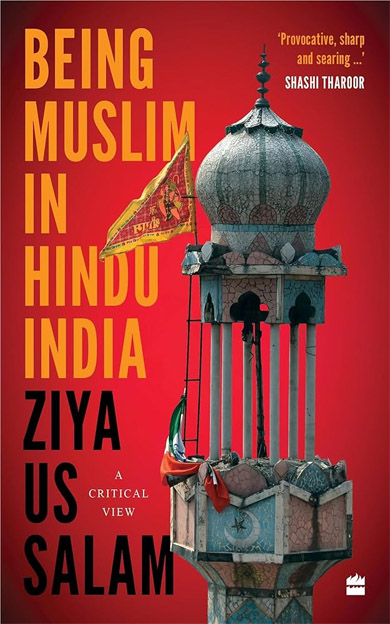
One of the important works that helps us understand the contemporary Muslim experience in India is Being Muslim in Hindu India (2024), by journalist and author Zia Us Salam. The book has also been translated into Malayalam under the title Hindutva India-yile Muslim.
He did not title the book The Muslim in India, but The Muslim in Hindu India. The title itself raises a question: Is the country moving away from the constitutional and secular vision of post-independence India towards a different political and cultural direction?
In the book, Zia Us Salam examines the experiences of Muslims in India from several perspectives. His main discussion concerns how the media, politics, education, the legal system, and wider society perceive Muslims. He argues that Muslims in India today face not merely economic and social challenges. They increasingly find themselves in a situation where even their nationality, patriotism, and citizenship are repeatedly questioned. In post-independence India, Muslims were equal citizens under the Constitution. However, in recent years, the tendency to portray Muslims as “the other” in public discourse has grown stronger, he observes.
He notes that certain recurring stereotypes about Muslims are repeatedly circulated through television debates, election campaigns, social media, and films:
- Muslims are suspected of lacking patriotism.
- Muslims pose a demographic threat.
- Muslims receive special privileges.
- Muslims are descendants of historical invaders.
One of the book’s central concerns is how the social experience of an ordinary Muslim changes when such ideas are continuously propagated. The problem is not limited to a few isolated statements of hatred. It lies in negative perceptions of an entire community becoming part of public consciousness.
“Being Muslim Is to Be an Orphan”
One of the most widely discussed statements in Zia Us Salam’s book is: “Being Muslim is to be an orphan in India today.”
Here, the word “orphan” does not mean simply being without parents. When someone is orphaned, they lack a strong support system to turn to during times of crisis. Many Muslims in India today are experiencing something similar.
When a mosque is demolished, when a Muslim youth becomes a victim of a hate crime, or when hate speech is directed against a community, who speaks up for them? This is the question he raises.
The government remains silent. Most major national political parties hesitate to speak openly about Muslim issues. An atmosphere has emerged in which even speaking about Muslim rights can invite accusations of “appeasement” for electoral reasons.
Even major opposition parties are often seen maintaining a cautious silence on Muslim issues. It is against this backdrop that the metaphor of “orphanhood” becomes relevant. It describes the psychological experience of a community. The health of a democratic country should be measured not by the security of its majority, but by the security of its minorities.
Media Silence and Society
In a democratic system, the media are often described as the “fourth pillar.” Their fundamental responsibility is to scrutinise the government and political powers, question those in authority, and bring the voices of neglected people to the attention of the public. However, growing concerns have been raised about how issues affecting the Muslim community are reported in contemporary India.
Many incidents affecting Muslims fail to become national news. When a mosque is demolished or a madrasa is shut down, the coverage often lasts only a few days. By contrast, issues that place Muslims under suspicion can dominate television debates and social media for weeks.
In media studies, this is often described as “framing.” What influences public perception is not merely what a news story is about, but how it is presented. Muslims often appear in the news through issues involving security, terrorism, demographic debates, and religious controversies. Meanwhile, their social contributions, educational achievements, and rights-related concerns often receive little attention.
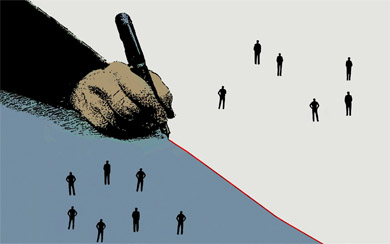
This is not merely a media problem; it concerns the moral sensitivity of society as a whole. The strength of a democratic society lies not only in protecting the rights of its own community, but also in being willing to protect the rights of others. Treating the problems of Muslims as problems that concern only Muslims will ultimately become a failure of democracy itself. Often, what hurts more than injustice is society’s indifference to it.
Majoritarian Politics and Muslim Identity
Over the past few decades, the influence of Hindutva politics in India has grown considerably. Hindutva is a political ideology that seeks to define the nation primarily through Hindu cultural traditions. Organisations associated with the Sangh Parivar, among the principal proponents of this ideology, are seen as attempting to reinterpret Indian history and national identity.
Within this political narrative, Indian history is often presented as a story of “persecuted Hindus and Muslim invaders.” The complex political and social history of medieval India is reduced to a narrative of religious conflict. The alleged cruelties of Muslim rulers are highlighted, while their administrative, cultural, and architectural contributions are often overlooked. The political consequences of this interpretation of history are significant.
Although contemporary Indian Muslims have no direct connection to medieval rulers, they are frequently portrayed in public discourse as representatives of that history. Situations also arise in which a Muslim mosque is viewed not simply as a place of worship, but as a symbol of “historical invasion.”
From the Babri Masjid dispute in Ayodhya to the Gyanvapi Mosque and Shahi Eidgah controversies, many observers view these issues as part of this political climate. A dispute concerning a place of worship extends beyond the boundaries of the property itself and becomes a symbol in national politics.
Indian Muslims have played a significant role in shaping the country’s history and culture. Their contributions to the freedom struggle, literature, architecture, science, and trade have been substantial. Yet a growing perception persists that they are often portrayed as outsiders to “real India.”
What Does the Constitution Say?
The Indian Constitution is regarded as one of the most comprehensive and progressive constitutions in the world. It was designed to guarantee equal rights to everyone in a country rich in religious, linguistic, and cultural diversity. Accordingly, it gives particular importance to minority rights and religious freedom.
Article 25 guarantees all citizens freedom of religion and the right to practise their faith. Article 26 grants religious denominations the right to establish and maintain their own religious institutions. Articles 29 and 30 guarantee minorities rights to preserve their culture and maintain educational institutions.
These are not merely legal provisions; they are fundamental components of the idea of India. The Constitution envisions India not as a religious state, but as a republic that guarantees equal citizenship to people of all faiths. This is where concerns about the contemporary situation arise: Do the rights guaranteed by the Constitution always correspond with the realities on the ground?
If Muslim citizens find themselves worrying about their places of worship, educational institutions, and religious identity, the issue concerns the very spirit of the Constitution. The strength of the Constitution lies not in the articles written within it, but in their practical implementation. It is not enough for a right to exist on paper. People must be able to experience that right in society.
The country envisioned by India’s founding leaders was not one governed by the dominance of a religious majority. It was a democracy in which both the majority and minorities could feel equally secure.
Dr. B. R. Ambedkar once warned: “However good a Constitution may be, its success or failure depends on the attitude of those who implement it.”
How Should This Situation Be Addressed?
Criticism of the contemporary situation is necessary. Raising one's voice against injustice is equally essential.
The biggest question facing the Indian Muslim community today is: “How should this situation be addressed?”
For a believer, prayer is of paramount importance. Emotional reactions alone are ineffective. History teaches us that the survival and progress of a community depend on its intellectual, social, and educational strength.
The greatest need of Indian Muslims today is educational advancement. Their presence in schools, universities, and research institutions must be strengthened. Knowledge and professional excellence make a community’s voice more influential.
Second, legal challenges must be strengthened. In democratic countries, rights are often protected through courts and constitutional mechanisms. It is essential to maintain faith in the rule of law and make use of all available constitutional remedies.
Third, greater cooperation with civil society and human rights movements is necessary. Minority rights are not an issue that concerns only Muslims. They are connected to the health of democracy itself. Therefore, broader social alliances must be built.
Fourth, the community must avoid a victim mentality. Although the challenges are real, it is not beneficial for a community to concentrate all its energy solely on grievances. Throughout history, minority communities have advanced through education, economic empowerment, and social organisation.
Fifth, Indian Muslims need not adopt a defensive position regarding their Indian identity. Their contributions to the country’s history, culture, freedom struggle, and nation-building have been significant. Indian Muslims are not guests in this country; they are co-creators of it.
The greatest challenge in this situation is to avoid surrendering to despair. No difficult period in history lasts forever. Societies change. Political circumstances change. Public attitudes change. But change comes through organised efforts, education, patience, and moral commitment.
What Indian Muslims need today is not a politics of fear, but a politics of hope. They need not only the language of grievances, but also the language of constructive action. The true strength of a community lies not in the crises it faces, but in how it responds to them.
Faith and Hope in Times of Trial
Throughout history, Muslim communities have faced various challenges and crises. The loss of political power, social isolation, colonial domination, persecution, and displacement are among the many experiences that form part of Muslim history. In such circumstances, Islam teaches not despair, but hope and steadfastness.
Allah says: “We will certainly test you with something of fear and hunger and a loss of wealth, lives, and fruits, but give good news to those who patiently persevere.” (Qur’an 2:155)
When a community passes through difficult circumstances, they should not be viewed merely as political events; from the perspective of religion, they are also trials.
Elsewhere, Allah says: “So do not weaken and do not grieve, and you will be superior if you are true believers.” (Qur’an 3:139)
The history of the early Muslims in Makkah is the greatest example of this message. Prophet Muhammad ﷺ and his Companions endured social boycotts, economic blockades, and physical persecution. Yet they did not surrender to despair. They remained steadfast in their values and faith.
At various stages of Islamic history, Muslim societies suffered severe setbacks. When the Mongols conquered Baghdad in 1258, the political and intellectual centre of the Muslim world was devastated. The fall of Muslim rule in Al-Andalus was another of the greatest tragedies in Muslim history.
Whether the community faces action against mosques, political controversies, or media neglect, its response must be grounded in justice, patience, wisdom, legal struggle, and social service.
The Qur’an says: “If Allah helps you, none can overcome you.” (Qur’an 3:160)
The important thing is to attain the qualities that make one worthy of Allah’s help. This means living a life founded upon Tawheed. Such faith gives the Muslim community confidence during times of crisis. A believer’s hope is not based solely on political circumstances, but on the promise of Allah.
A Question About India’s Future
India’s history is not solely a history of conflict; it is also one of coexistence and sharing. People of different religions and languages have lived together here for centuries. The greatest strength of India lies in its diversity.
Therefore, the challenge today is not merely a challenge facing Muslims. The real question is how faithfully India will uphold its constitutional promises.
Will India preserve its pluralism? Will minorities be able to live in this country with a sense of belonging? Will the spirit of the Constitution remain stronger than political power?
These are not questions concerning Muslims alone. They are questions about the future of India. The answers will determine the kind of India inherited by future generations.
Translated By: Raihan Shaheed