


Human Rights and Atheism
✒ Raihan Shaheed
12 October 2026, 1 Jumada Al-Awwal 1448 AH
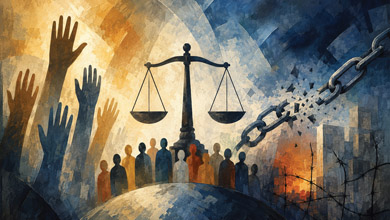
The twenty-first century is often referred to as the "century of human rights."¹ Today, whenever an injustice occurs in any part of the world, protests against it are articulated in the language of human rights. Concepts such as the right to life, freedom of expression, freedom of religion, equality, dignity, education, and privacy now lie at the core of global politics and social discourses.
Atheists are those who have crowned themselves as the apostles of human rights while granting a philosophical veneer to all manner of immoralities across the world.
However, when it comes to determining the moral yardsticks used to define values and rights, the relevant question arises: what standard do atheists actually have to offer?
The Universal Declaration of Human Rights, issued by the United Nations in 1948, played a decisive role in transforming human rights into globally recognized values.² Today, the language of human rights is commonly used to criticize a government, condemn a war, or support a social movement.
An interesting aspect of this is that both religious believers and atheists participate equally in discussions surrounding human rights. A Muslim, a Christian, a Hindu, and an atheist may all support human rights.
However, a deeper philosophical question arises here: from where did human beings derive these rights? Who granted humans the right to live? What makes human life so valuable? Why is killing a human being wrong, while killing a mosquito is not considered wrong? Why is enslaving humans an injustice, whereas rearing and utilizing a cow or a horse is not?
Any discussion on human rights ultimately leads to a conversation about human nature. What is a human being? What value does a human possess? What is the source of human dignity? Although the modern world strongly defends human rights, debates concerning their philosophical foundations are often ignored. Can a worldview that denies God objectively justify human rights? This question demands serious examination.
What Are Human Rights?
Although we frequently use the term "human rights," we rarely reflect on its true meaning. Simply put, human rights refer to the fundamental rights every individual receives merely by virtue of being human. They do not depend on citizenship in a nation, nor on race, religion, language, or economic status; they are rights granted solely because one is human.³
These include the right to life, the right to liberty, equality before the law, property rights, freedom of religion, freedom of expression, and the right to human dignity.⁴
The most vital characteristic of human rights is that they are universal, meaning they apply equally to all human beings across the world.
Here a crucial question arises: why do we believe that human rights are universal? What if the majority of people in a country decide that a minority community has no right to live? If a society decides that slavery is acceptable, can it be called right? On what basis do we say that denying the rights of Jews in Hitler's Germany was wrong?
To answer these questions, one must understand the philosophy behind human rights. Historically, two primary foundations have been proposed for human rights. The first is the religious perspective, which posits that human beings possess inherent worth and that this worth originates from God. The second is the secular perspective, which holds that human rights exist on the basis of social contracts or human consensus. Which of these two approaches provides a more solid foundation for human rights is the central focus of our discussion.
Historically, two primary foundations have been proposed for human rights. The first is the religious perspective, which posits that human beings possess inherent worth and that this worth originates from God. The second is the secular perspective, which holds that human rights exist on the basis of social contracts or human consensus.
Atheism: A Worldview
Atheism is not merely confined to "disbelieving in God." In modern thought, it has often developed into a comprehensive worldview. Not all atheists think alike. Some explicitly deny the existence of God, while others refrain from belief citing a lack of evidence. However, a significant part of contemporary atheism is tied to the concept of Naturalism.
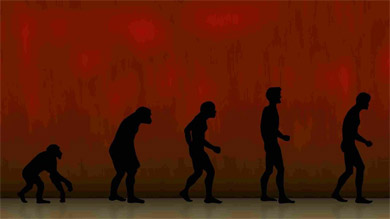
According to Naturalism, there is nothing beyond nature in the universe. Concepts such as God, angels, the soul, divine revelation, and the hereafter are not reality. What exists is the physical universe and its laws. Under this worldview, human beings are also a part of nature. A human being is not a special creation, but rather the product of millions of years of evolutionary processes.
Charles Darwin was among those who played a major role in popularizing this concept. His theory of evolution offered a scientific explanation for the diversity of living organisms. In this worldview, the difference between human beings and other living creatures is not fundamental, but merely a matter of degree. Humans, too, are organisms simply more highly evolved ones.
Many modern atheists embrace this position. For instance, Richard Dawkins has described human beings as "vehicles used by genes to survive."⁶ Similarly, Yuval Noah Harari questions the approach that views humans as a being completely distinct from other animals.⁷
This is where a major philosophical problem regarding human rights arises. If human beings are merely the product of evolution, how can we prove that humans possess a unique intrinsic value? If humans and other living creatures are part of the very same natural process, what serves as the foundation for the concept of human rights? These are questions that continually challenge atheists.
Who Decides Good and Evil?
Morality is an indispensable topic in any discussion on human rights, as the very concept of a right presupposes that certain things are right and certain things are wrong.
For example: "Murder is wrong." "Rape is wrong." "Torture is wrong." "Slavery is wrong." All of these are moral statements. However, a fundamental question arises: "If there is no God, how do we prove that these are wrong?"
An atheist may personally hate murder, condemn rape, and support human rights. But that is not the question; the question is whether it can be proven objectively that these are wrong. If a person says, "I do not feel that murder is wrong," what response can be given to them? If the answer is simply "I feel that it is wrong," then that is merely an opinion, a conflict between two subjective viewpoints. In a religious worldview, this problem does not exist, because good and evil are tied to the commands of Allah. Even if human opinions change, moral standards remain objective.
If human beings are merely the product of evolution, how can we prove that they possess a unique intrinsic value? If humans and other living creatures are part of the very same natural process, what serves as the foundation for the concept of human rights? These are questions that continually haunt atheists.
Truths do not change. But in an atheistic worldview, on what basis are good and evil determined?
Some argue that societal consensus is the foundation.⁸ Yet, societies are constantly changing. At one time, slavery was legally and socially accepted, and the majority of people believed it to be right. Did that make it right? Others argue that morality developed through evolution, that because cooperative societies were more successful, humans evolved moral behaviors.⁹ However, the fact that a behavior is evolutionarily advantageous does not prove that it is morally right.
Many philosophers have pointed out this problem. Michael Ruse wrote that human morality is a product of biological evolution, and that it does not necessarily point to objective truths.¹⁰
When Friedrich Nietzsche declared that "God is dead," he was not celebrating; rather, he was warning that a culture that abandons God will ultimately lose its moral foundation.¹¹ Therefore, the main challenge of atheism is not denying the existence of God, but explaining how morality can be justified without God.
The Crisis of Atheism
At the center of all discussions on human rights lies a fundamental understanding: human beings possess inherent value. That is why torturing a human being is wrong. That is why killing a human being is wrong. That is why enslaving a human being is wrong. But where does this inherent value come from?
The believer's answer is simple: man is the creation of Allah, and therefore possesses dignity and rights. However, in an atheistic worldview, a human being is merely a part of nature, the product of millions of years of evolution. How, then, does human life become sacred? Why is a human life more valuable than that of a stone, a tree, or a monkey?
Here, many atheists propose the concept of the Social Contract, the idea that humans recognize rights based on mutual agreement. Yet a major problem arises: if rights are merely the result of a social contract, society can also alter or revoke them.
In that case, human rights are not truly universal; they are merely temporary social arrangements.
At the center of all discussions on human rights lies a fundamental premise: human beings possess inherent worth. That is why torturing a human being is wrong. That is why killing a human being is wrong. That is why enslaving a human being is wrong. But where does this inherent worth originate from?
It is precisely here that the observation raised by the famous historian Yuval Noah Harari becomes notable. He argues that human rights are not facts to be found in nature, but rather "imagined orders" created by humans.¹²
Not everyone may accept Harari's conclusion, but the question he raises is a serious one. If human rights are not objective facts of nature, what is their ultimate foundation? If a nation chooses to deny them, on what ground do we call that wrong?
Thus, the greatest challenge concerning human rights is not supporting them, but justifying them.
Why is Man Exceptional?
Ultimately, the discussion on human rights leads to a decisive question: why is man exceptional? This is the concept known as "Human Exceptionalism."¹³
Most legal systems and moral frameworks in the world operate on the premise that human beings are fundamentally distinct from other living creatures. That is why taking a human life is termed "murder," enslaving a human is considered injustice, and torturing a human is deemed a crime. But on what grounds do we assert that human beings are unique? Under atheistic Naturalism, the difference between humans and other living organisms is not qualitative, but merely quantitative, a human being is simply a creature possessing a higher degree of intelligence.
However, if intelligence is the sole foundation of human worth, significant problems arise. A newborn infant possesses far less cognitive capacity than an adult primate. A person with a severe intellectual disability may have lower cognitive function than certain animals. Is intelligence alone, then, the measure of human dignity? If so, how do we protect the rights of the most vulnerable among us?
This is where the grand crisis of human rights comes to light. In practical life, we operate on the belief that all human beings possess equal dignity and rights. Yet, deriving that conclusion purely from evolutionary Naturalism is no easy task.
The Islamic perspective stands clear on this matter: human beings are exceptional because they are the creation of Allah. As the Qur'an states: "And We have certainly honored the children of Adam..." (Qur'an 17:70).
A human being's worth does not stem from their strength, intelligence, wealth, or ethnicity; it exists because they are created by Allah. This is why a newborn infant, an elderly person, an impoverished individual, and a person with disabilities all share the exact same intrinsic human dignity. The most robust foundation for human rights lies within this faith, because it locates the reason for human exceptionalism not within humans themselves, but in the Creator who brought them into being.
Animals and Human Rights
Animal rights has become a prominent subject in contemporary ethical discourse. As the argument that human beings are merely part of nature, and not fundamentally distinct from other living creatures, gained traction, discussions surrounding the rights of animals expanded rapidly.¹⁴
At the center of this discourse lies a critical question: "What is the difference between humans and animals?”
If, on the basis of atheistic Naturalism, human beings are merely organisms that evolved from other creatures, what is the justification for granting special rights to humans alone? Some modern philosophers have challenged the traditional distinction between humans and animals. They term the approach that assigns exclusive priority to human interests as "Speciesism", arguing that speciesism is a form of discrimination no different from racism or sexism.¹⁵
Here, a serious question arises. If all living beings share the same moral status, is killing a human being just as wrong as killing a cow? If given the chance to rescue a child or a dog at the same time, which one should be saved first? If enslaving a human being is wrong, why is it permissible to utilize animals for human needs?
A human being's worth does not reside in their ethnicity, power, intelligence, or productivity; it exists because they are the creation of Allah. Consequently, even the most vulnerable human being is entitled to that very same dignity and protection.
A major lesson that the history of human rights teaches us is this: if human worth is grounded in societal utility or biological superiority, human rights will ultimately be endangered. They require a far more solid and immutable foundation.
In practical life, the majority of people acknowledge that human life possesses a unique intrinsic worth. We do not view the death of a human being and the death of an animal in the same light, nor do legal systems treat them as equivalent. Yet the question remains: "Why was man granted this special status?"
The Islamic response is clear: human beings occupy a distinct and honored position among the creations of Allah. At the same time, Islam commands compassion and responsibility toward animals. While man has no right to mistreat animals, Islam does not teach that humans and animals share the exact same moral status. Therefore, if the concept of human rights is to endure, we must first recognize that human beings possess a distinct, intrinsic value separate from all other living creatures.
Richard Dawkins, The Selfish Gene, and Speciesism
Richard Dawkins is among the most influential thinkers in modern atheism. His renowned work, ‘The Selfish Gene’, presents evolution through a gene-centric lens.
Dawkins' core premise is that living organisms are merely "survival machines", vehicles utilized by genes to sustain and replicate themselves. Humans, too, are part of this biological mechanism. While this paradigm exerted a massive influence on the scientific community, it simultaneously raised profound philosophical dilemmas.¹⁶
"Why was man granted this special status?" The Islamic response is clear: human beings occupy a distinct position among the creations of Allah. At the same time, Islam teaches compassion and responsibility toward animals. Humans have no right to mistreat animals, yet Islam does not teach that humans and animals share the same moral status. Therefore, for the concept of human rights to endure, one must first recognize that human beings possess a unique value distinct from all other living creatures.
If human beings are merely survival vehicles for genes, what constitutes our inherent worth? Where does the sanctity of human life originate? On what foundation do human rights stand? While thinkers like Dawkins question the exceptional status of humanity, the language of modern human rights simultaneously grants human beings a privileged and unique moral standing.
A contradiction becomes evident here. On one side, it is claimed that humans are fundamentally no different from other living creatures. On the other side, humans alone are granted special rights and legal protections. From our position with a firm moral foundation, we ask: "To protect human rights, must we not first justify the unique status of humanity?"
Evolutionary theory (even assuming it to be correct) may explain the biological origins of man, but it does not account for man's moral worth. The question "How did man come to be?" does not have the same answer as "Why does man have value?" Science may address the first question, but the second belongs firmly to the realms of philosophy and ethics. Therefore, in the discourse on human rights, biology alone is insufficient; a philosophical explanation of human dignity is equally essential.
The Dangers of Atheism
The purpose of this article is not to portray all atheists as enemies of human rights. However, examining the real-world implications of any worldview remains imperative. Historically, evaluating human beings purely through biological metrics has yielded catastrophic consequences, Eugenics serving as a prime example. In the late 19th and early 20th centuries, certain Western thinkers argued that selective scientific breeding ought to be used to "improve" human society. Francis Galton stood as one of the chief proponents of this movement.¹⁷
The premise of the eugenics movement can be summarized as follows:
1. Positive Selection: The "desirable" members of society should be encouraged to reproduce more frequently.
2. Negative Selection: Reproduction among "undesirable" groups should be actively curtailed.¹⁸
These notions eventually culminated in forced sterilization programs and egregious human rights violations.¹⁹ Nazi Germany adopted these concepts in their most extreme form: under the guise of racial purity and genetic superiority, millions were subjected to systematic torture and slaughter.²⁰
What occurs when human beings are stripped of inherent worth and evaluated strictly on biological efficiency? Who deserves to live? Who is of utility to society? Whose life holds greater value? Such questions invite dangerous conclusions as history clearly demonstrates.
Certain 20th-century political ideologies ceased to view the individual as possessing transcendent spiritual worth, reducing humans to mere components of economic, racial, or biological categories. Widespread human rights atrocities were the inevitable outcome.21
Islam fundamentally rejects this reductionist paradigm. A human being's worth does not reside in race, physical power, intelligence, or economic productivity; it exists because they are created by Allah. Consequently, even the most vulnerable individual is entitled to equal dignity and protection.
The history of human rights offers a crucial lesson: grounding human value in social utility or biological dominance leaves those rights perpetually vulnerable. They require a far more steadfast, immutable foundation.
References:
1. Quoted by former UN Secretary-General Kofi A. Annan, The Age of Human Rights? - UAB Institute for Human Rights Blog https://sites.uab.edu/humanrights/2018/12/10/the-age-of-human-rights/
2. Universal Declaration of Human Rights United Nations: https://www.un.org/en/about-us/universal-declaration-of-human-rights
3. Human Rights | United Nations https://www.un.org/en/global-issues/human-rights
4. Ibid
5. On the Origin of Species by Charles Darwin (1859)
6. The Selfish Gene by Richard Dawkins (1976)
Sapiens by Yuval Noah Harari (2014)
8. Two Treatises of Government by John Locke (1689)
9. Evolutionary Ethics by Michael Ruse & Robert J. Richards (1998)
10. Taking Darwin Seriously by Michael Ruse (1998)
11. The Gay Science by Friedrich Nietzsche (1882)
12. Sapiens by Yuval Noah Harari (2014)
13. The Arrogant Ape: The Myth of Human Exceptionalism and Why It Matters by Christine Webb (2025)
14. Animal Liberation by Peter Singer (1975)
15. Ibid
16. The Selfish Gene by Richard Dawkins (1976)
17. Essays in Eugenics by Francis Galton (1909)
https://www.gutenberg.org/ebooks/73802
18. Ibid
19. War Against the Weak: Eugenics and America's Campaign to Create a Master Race by Edwin Black (2003)
20. The Nazi Doctors: Medical Killing and the Psychology of Genocide by Robert Jay Lifton (1986)
21. In the Name of Eugenics: Genetics and the Uses of Human Heredity by Daniel J. Kevles (1985)
Translated By: Dr.Minha Subair