


Terrorism Prevention or Muslim Profiling?
✒ Raihan Shaheed
7 October 2026, 26 Rabi' al-Thani 1448 AH
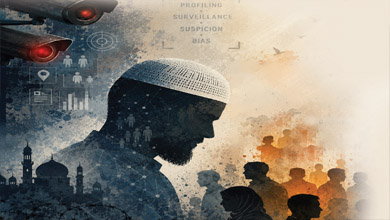
A democratic nation has both the right and the responsibility to combat terrorism. Strong laws and efficient security systems are essential to confront violent ideologies and terrorist organisations that threaten the lives and property of innocent people and national security. There is no room for disagreement on this. However, when, in the name of preventing terrorism, the ordinary religious life of a particular religious community itself begins to be viewed with suspicion, it ceases to be merely a security issue. It becomes a question of constitutional rights, religious freedom and equality of citizenship.
It is in this context that the new Anti-Radicalisation Cell (ARC) system implemented by the Gujarat government and the confidential Standard Operating Procedure (SOP) prepared for it need to be discussed. Although it is officially presented as a mechanism to prevent terrorism and online radicalisation, an examination of the provisions of the SOP makes it clear that the Muslim community is the primary focus of surveillance. This is why human rights organisations and legal experts have described it as “Institutionalised Communal Profiling.”
The reason is that many of the things mentioned in the SOP as indicators for surveillance are not directly connected to any criminal activity. Rather, they are part of the ordinary religious life of Muslims. Growing a beard, wearing the niqab, using Arabic words, observing i‘tikaf in a mosque and visiting madrasas are specifically mentioned in the SOP. It also instructs authorities to prepare a directory of madrasa teachers and conduct background checks on them.
The fundamental question here is this: “Can becoming a more religiously observant Muslim, or taking one’s religious life more seriously, become a reason for being placed on the suspicion list of security agencies?”
What we are examining here is whether measures intended to combat terrorism are consistent with the spirit of the Constitution, religious freedom and equal justice. In a democratic nation, security and freedom are not mutually exclusive values. Both are fundamental principles that must be protected equally.
What Does the SOP Say?
The Anti-Radicalisation Cell’s activities are divided into five stages: Prevention, Detection, Intervention, Rehabilitation and Monitoring.
The document begins by defining a “radicalised person.” It defines such a person as someone who engages in activities that threaten the unity and integrity of the country and attempts to attract others towards extremist ideas. There is little controversy in this definition itself. However, the criteria that follow are noteworthy.
The first stage instructs authorities to monitor social media, online platforms and suspicious networks. It also states that people “influenced by Salafi-Wahhabi ideology,” those “believed to be spreading extremist ideas,” and extremism in prisons should be specifically monitored. It further instructs the appointment of informants in various areas and the collection of additional intelligence.
The greatest controversy surrounding the SOP arises in this section. It lists various indicators for identifying a person as “at risk.” Some of them include:
* Suddenly growing a beard.
* Starting to wear the niqab.
* Increasing the use of Arabic words.
* Distancing oneself from friends and family.
* Expressing strong anger over attacks against Muslims around the world.
* Showing behavioural changes after visiting Afghanistan or the Middle East.
Digital activities are also included in the surveillance. The SOP mentions the use of encrypted messaging applications, joining certain Telegram channels, sharing terrorist propaganda material, and using certain cryptocurrencies without a clear source of income. Many of these digital indicators could potentially form part of genuine security investigations.
The document also includes visiting madrasas, observing i‘tikaf and abandoning studies or employment in the name of Islamic obligations. It further instructs authorities to prepare dossiers on identified individuals, update them every month and continuously monitor their activities.
The subsequent sections of the document also discuss counselling, deradicalisation programmes, the involvement of family members, psychologists and religious scholars, and assistance in returning individuals to education and employment. It also proposes organising community programmes, conducting seminars in mosques and madrasas, and continuing long-term surveillance of identified individuals. The document states that if violations of the law or preparations to commit such violations are identified, action may be taken under the Bharatiya Nyaya Samhita and UAPA.
The structure of the document shows that, alongside counter-terrorism measures, importance is also given to counselling and rehabilitation. However, the greatest concern is that many of its surveillance criteria are connected to integral aspects of ordinary Muslim religious life.
Controversial Provisions
Any security guideline should be assessed not merely by what it aims to achieve, but by how it seeks to achieve that objective. Terrorism, links with terrorist organisations, preparations for violence, stockpiling explosives and terrorist propaganda are naturally matters that security agencies may monitor. However, concern arises when numerous aspects of ordinary Muslim religious life are also included in the list of “warning signs.”
For example, suddenly growing a beard, starting to wear the niqab and using more Arabic words are mentioned in the SOP as behavioural changes. Yet none of these is an illegal act. Rather, they are practices followed by millions of Muslims around the world as part of their religious beliefs.
Similarly, expressing strong anger or protest over attacks against Muslim communities in different parts of the world is also mentioned as a factor for surveillance. When Muslims are unjustly killed or subjected to human rights violations anywhere in the world, such as in Gaza, a Muslim feeling pain and responding to it is a natural religious and humanitarian reaction. It is not appropriate to treat this as a security concern.
The SOP also instructs that those “influenced by Salafi-Wahhabi ideology” should be specifically monitored. Different religious currents and intellectual traditions exist within the Muslim community in India. Unfairly associating any one of these religious traditions with a security threat raises serious questions concerning religious freedom.
Even more noteworthy are the provisions concerning madrasas and religious scholars. The document contains instructions to collect information about the maulavis teaching in madrasas, prepare a directory, conduct background checks and investigate whether they are associated with any “extremist ideological” organisations. Thousands of madrasas have been functioning in India for decades, with hundreds of thousands of students receiving ordinary religious education in them. There is little doubt that placing such institutions generally under a cloud of suspicion sends a message of distrust towards the community as a whole.
Another controversial provision concerns i‘tikaf. Spending time in a mosque during the last ten days of Ramadan for worship and spiritual reflection is one of the important Sunnahs of Islam. Yet the SOP mentions “observing i‘tikaf before planned activities” as an indicator for surveillance. This means that even a religious practice such as i‘tikaf is viewed through the lens of suspicion.
Beards, niqabs, madrasas, i‘tikaf, the Arabic language, maulavis and Salafi thought... When these elements are considered together, one thing becomes clear: the surveillance criteria in the SOP are primarily connected to the religious lifestyle of Muslims. This is what distinguishes the document from an ordinary counter-terrorism guideline and gives rise to criticism.
In a democratic society, investigations should be based on the actions of individuals, not on their religious identity or forms of worship. When this fundamental principle is violated, the boundary between security and discrimination begins to blur.
Are Religious Observance and Terrorism the Same?
The most fundamental question raised by the SOP is this: “Is becoming a more religiously observant Muslim evidence that a person is becoming more dangerous?” It is essential to answer this question objectively.
Every religion in the world has outward expressions of faith. Sikhs wear turbans. Jews wear kippahs. Christian clergy wear distinctive clothing. Hindu ascetics wear saffron robes and apply tilaks. Some people also refrain from shaving or cutting their hair. For Muslims, growing a beard, women wearing hijab and niqab, greeting others in Arabic, praying in mosques, observing i‘tikaf and studying religion are all part of religious life.
These religious practices are not, in themselves, evidence of a crime. There is no scientific evidence establishing a cause-and-effect relationship between a person wearing the niqab and another person engaging in terrorism. Likewise, there is no reliable research demonstrating that growing a beard, observing i‘tikaf or studying in a madrasa makes a person violent.
In fact, researchers studying terrorist activities point out that violent radicalisation is a complex socio-political and psychological process. Numerous factors can influence it, including personal isolation, political circumstances, online propaganda, experiences of war, psychological factors and social networks. The symbols of a particular religion alone cannot be treated as indicators of such radicalisation. That would be a grave injustice.
This is where the crucial distinction between “religiosity” and “violent radicalisation” must be understood. Religiosity refers to the depth of a person’s religious life. Radicalisation refers to an ideological position that justifies violence and a willingness to use it against others. The two are not the same.
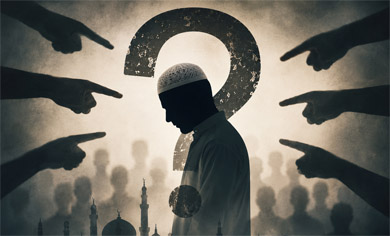
In reality, hundreds of millions of religiously observant Muslims around the world live peacefully and make valuable contributions to society. Viewing the ordinary religious life of an entire religious community with suspicion because of the violent actions of a small section is not a just approach. It also has more serious consequences.
When religious practices themselves become subjects of suspicion, ordinary believers may begin to feel that they are under constant surveillance. This can weaken the relationship of trust between the government and minority communities. Public cooperation and trust are essential for security systems to succeed. But when a sense develops that an entire community is being treated with suspicion, the possibility of losing that trust increases.
The fight against terrorism is necessary. But it must not become a fight against religious observance. Because in a democratic society, crimes must be investigated, not religion; violence must be prevented, not faith.
The Constitution and Civil Rights
The Indian Constitution guarantees equality before the law to all citizens. Under Article 14, every citizen is entitled to equal protection of the laws. The question naturally arises as to how far bringing a person under greater suspicion solely on the basis of their religious identity is consistent with this principle.
Article 15 prohibits discrimination on the basis of religion. If the practical impact of a security policy primarily affects a particular religious community, it needs to be examined whether it produces discriminatory consequences. Even more important is Article 25, which states that every citizen has the right to freely profess and practise their religion and propagate it.
The right to privacy is also relevant here. In 2017, the Supreme Court, in the case of Justice K. S. Puttaswamy vs Union of India, declared privacy to be a fundamental constitutional right. When extensive information is collected about an individual’s religious life, worship, social relationships, travels and digital interactions, it must be constitutionally assessed whether such collection meets the requirements of necessity, proportionality and legality.
Maintaining a balance between security and freedom is a challenge faced by every democratic nation. However, the spirit of the Constitution makes one thing clear: a person’s religious identity can never be treated as a substitute for evidence of a crime. Investigations must be based on evidence, not beliefs; on unlawful activities, not religious practices.
The Global Context
The Anti-Radicalisation SOP in Gujarat is not an isolated incident. Over the past twenty-five years, similar trends have emerged in many parts of the world, bringing Muslim communities to the centre of security discussions.
Following the attacks of September 11, 2001, numerous security laws were implemented around the world in the name of the “War on Terror.” Countries including the United States, Britain, France and Germany strengthened surveillance, tightened border controls and granted greater powers to intelligence agencies.
In the United States, documents that emerged later revealed that the New York Police Department had extensively monitored Muslim mosques, student organisations, halal restaurants and Muslim businesses for years. Later investigations pointed out that this surveillance had not succeeded in preventing even a single terrorist attack.
Britain’s Prevent Strategy also became the subject of similar controversy. When teachers and staff in schools, universities and public institutions were required to identify signs of “radicalisation,” criticism arose that Muslim students were being subjected to unnecessary suspicion and investigations. International media have reported incidents in which some children were referred to authorities simply for speaking about the Qur’an or Palestine.
In France, controversies surrounding the hijab, niqab and abaya in the name of secularism, as well as measures taken against mosques and Muslim organisations, created significant concerns within the Muslim community.
These experiences offer an important lesson: when security policies are designed around a particular religious community, they can increase division rather than social trust.
Islam Against Terrorism and Injustice
A misconception often spreads in such discussions: that there is some inherent connection between the outward religious practices of Islam and violent extremism. However, an examination of Islamic sources makes it clear that there is no basis for this assumption.
The Qur’an (5:32) states that unjustly killing one person is like killing all of humanity, and that saving one life is like saving the lives of all humanity.
The Qur’an also explains how Muslims should deal with people of other faiths:
“Allah does not forbid you from being kind and just to those who have neither fought you because of your religion nor driven you out of your homes. Surely Allah loves those who uphold justice.”
(Qur’an 60:8)
Therefore, violence targeting innocent people, terrorism, spreading fear in society and taking the law into one’s own hands have no place in Islam.
Security and Freedom
Combating terrorism is a constitutional responsibility of any government. Intelligence systems and investigative agencies must work effectively to protect citizens and the country. At the same time, another fundamental truth must also be recognised: civil liberties must not be eliminated in the name of security. The strength of a democratic nation lies not merely in its police system or arsenal, but in the rule of law, justice and commitment to the Constitution.
This is why an important principle recognised in modern security studies is Behaviour-Based Policing. In other words, investigations should be based not on a person’s religion or ethnicity, but on their actual behaviour and unlawful activities.
If a person is associated with terrorist organisations, calls for violence, collects weapons, manufactures explosives or provides financial support for terrorist activities, that person should be brought before the law. There is no question about that. But a person does not become a security threat simply because they study the Qur’an, grow a beard, observe i‘tikaf in a mosque, speak Arabic, study in a madrasa or protest human rights violations in Palestine.
A person’s religious identity is not evidence of their crime. It must not become the starting point of an investigation. This is precisely what India’s pluralism and Constitution demand.
Security agencies must identify criminals. But an entire community should not be treated with suspicion. Because where a community’s trust is lost, security itself becomes weaker. True security comes from mutual trust between the people and the government, not from distrust.
Translated By: Zainab Binth Farhan