


Social Media is not child’s play
✒ Raihan Shaheed
2 October 2026, 0 21 Rabi al-Thani 1448 AH
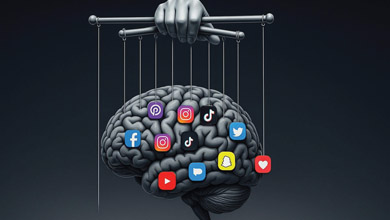
The growth of digital technology has provided human society with numerous conveniences, but its uncontrolled use is creating new social challenges. The influence of social media on the lives of children and adolescents is now raising serious concerns. Therefore, discussions about the need to introduce age-based restrictions on social media use are gaining momentum across the world.
It is in this context that the campaign launched by Wisdom Students, “Social Media Is Not Child’s Play,” becomes relevant.
Over the past few years, India has witnessed a massive digital revolution. The number of internet users, which stood at just 5.5 million in 2000, has now risen to more than 830 million. A significant section of these users consists of minors. India has become one of the countries with the highest number of Instagram and YouTube users in the world. The fact that more than 460 million people actively use social media indicates the scale of growth in this sector. However, the reality is that, unlike in developed countries, strict age restrictions are not effectively implemented in India.
The Need for Age-Based Restrictions
From toys to electronic devices, many products available in the market today clearly specify age limits. Restrictions such as Age 1+, 3+, 10+ and 18+ are set according to suitability for different age groups. However, there is practically no such restriction on the mobile phone, which is one of the devices most widely used by children, or on the social media platforms accessed through it. This contradiction demands serious discussion today.
It is important to understand that the focus of regulation should not be the mobile phone itself, but rather the social media platforms accessed through it. The core of the problem is not the device, but the content and digital culture made available through it.
A Global Discussion
Several countries have already begun taking measures on this issue. Australia has recently implemented laws restricting social media use by children under the age of 16. These measures have been introduced with children’s safety and mental health in mind. The law also contains provisions for imposing heavy fines on social media companies that allow children to create accounts in violation of the regulations.
Serious discussions have also begun in India. Recently, the Karnataka government announced plans to prohibit social media use by children below the age of 16. Chief Minister Siddaramaiah announced the decision while presenting the state budget.
The primary objective is to control excessive mobile phone use among children and the harmful effects of social media. The Andhra Pradesh government has also announced that it is considering similar measures. There, a proposal has been put forward to implement a system within 90 days to prevent children below the age of 13 from using social media.
These state-level initiatives have opened the way for a major national discussion in India on children’s digital safety. At a time when various states and members of the public are demanding that the central government examine legal measures on the issue, policy-level discussions are also beginning across the country. In Kerala too, this has become one of the subjects of public discussion in recent days.
The Impact on Children
Social media algorithms are a factor that makes these problems even more complicated. Once a child watches a particular type of video, these systems are designed to repeatedly present similar content to them. This can affect children’s ability to think and their balanced understanding of the world.
Experts have also raised concerns that excessive social media use can contribute to behavioural problems among children. An unlimited desire for self-display and validation can sometimes lead to excessive ego and unhealthy mental states.
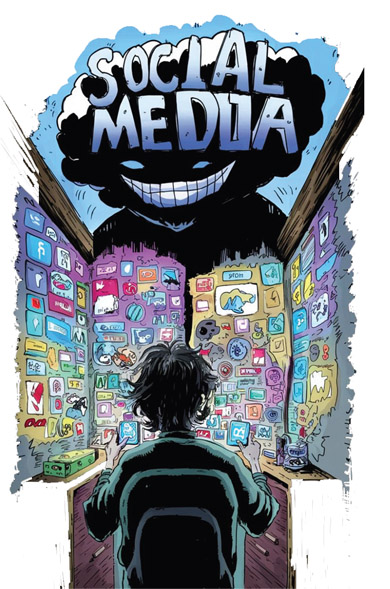
Studies also indicate an increase in mental health problems alongside this. There is growing concern that social media addiction can push children towards problems such as sleep deprivation, anxiety and depression.
The lack of censorship is another serious issue. Unlike films and television programmes, social media content does not have similarly strict systems of regulation. As a result, content involving pornography, violence and hate speech can reach young people.
The ability to bypass age restrictions using systems such as VPNs and to create fake accounts can also give children easy access to pornographic content and dangerous ideas. The harmful effects of this can affect their psychological and social development.
The Influence of Influencers
In the digital age, social media influencers have a major influence on children’s lives. Many of them often operate purely for commercial purposes without necessarily upholding educational values or social responsibility. As a result, there is a growing situation in which the influence of the market becomes stronger among children, replacing the influence traditionally exercised by teachers and parents.
Technological and Legal Solutions
Legal and technological interventions are essential to finding solutions to these problems. Instead of relying on systems where age is recorded through self-declaration, accurate age-verification mechanisms should be introduced. Artificial intelligence-based age verification and biometric systems could be used for this purpose.
Instead of allowing users to easily create accounts using only an email ID, secure systems based on phone numbers should also be considered. In addition, platforms should develop technological systems capable of identifying users below the required age and restricting their accounts.
Intervention in Education
Providing children with proper awareness about the digital world is equally important. Digital responsibility should be included in school curricula as a subject of study. When platforms such as YouTube are used for educational purposes, the use of safety systems specifically designed for children should also be made mandatory.
Social Responsibility
Ensuring children’s safety is not the responsibility of families alone. It is a shared responsibility of society, governments and technology companies. Serious discussions about social media, which has a major influence on the formation of children’s character, are essential.
A large section of parents and teachers are demanding restrictions on this issue. Although some opposition may come from children, these measures should be viewed as steps intended to protect their future.
Why 16?
Studies on adolescent development indicate that by around the age of 16, most adolescents begin to develop stronger emotional regulation, more rational thinking and a clearer sense of identity. At this age, they are generally better equipped to recognise risks, deal with peer pressure and establish personal boundaries.
Delaying social media access until the age of 16 is not about isolating children from technology. Rather, it is about preparing them to use technology wisely and responsibly.
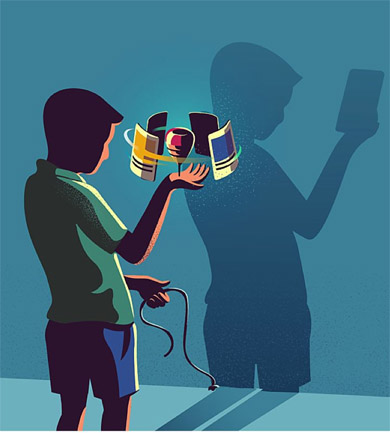
We follow the same logic in many other areas of life. Age limits are set for driving, voting and marriage because these activities require maturity and responsibility. Social media, which has a powerful influence on the human mind and social relationships, also requires the same level of caution.
What Does This Reform Propose?
This reform puts forward some basic principles:
1. Personal accounts should not be permitted for children under 16 on major social media platforms that allow public posting, messaging and profile creation.
2. Children or parents should not be criminalised under these restrictions. The responsibility for preventing accounts belonging to minors should rest with social media companies.
3. Accurate age-verification systems that respect users’ privacy and do not create unnecessary surveillance of children should be made mandatory.
4. There should be clear mechanisms for a child to access an account once they reach the age of 16.
5. Necessary exemptions should be provided for educational platforms used by schools and supervised learning tools.
Measures Needed Alongside the Reform
For this restriction to be effective, several supporting measures are also essential.
1. Digital Literacy Education
Before children begin using technology, they should be made aware of its advantages and disadvantages. Schools should teach critical thinking, media literacy, online safety, self-control and healthy screen habits. Children should understand how algorithms work, how misinformation spreads and what a digital footprint means.

2. Parental Support
Parents need guidance rather than blame on this issue. Workshops, toolkits and helplines can help families. Many parents experience anxiety without having a clear understanding of the dangers of the digital world.
3. Mental Health Support
Situations in which online dangers affect children psychologically are increasing. Strengthening school counsellors, community mental health services and confidential support systems is essential. Early intervention, before problems become serious, can contribute to children’s long-term well-being.
4. Safe Alternative Spaces
Children need safe digital spaces where they can create, learn and collaborate. Providing supervised digital platforms for education, creativity and collaboration can help children develop their abilities without having to enter harmful social media environments.
5. Benefits for Kerala
Delaying social media access until the age of 16 can provide several benefits to society:
* Children’s mental health and emotional well-being can improve.
* Better sleep quality and concentration can contribute to improved academic performance.
* Cyberbullying and online exploitation can decrease.
* Family relationships and direct friendships can become stronger.
* A generation can grow up entering social media with awareness rather than addiction and with a conscious approach to its use.
* In the long term, this may also help reduce mental health crises among young people.
Some Concerns
Some concerns may arise regarding these proposals:
1. Will children bypass the rules?
No system is completely free from flaws. However, laws shape social norms. Seat belt laws do not prevent every accident, but they have saved countless lives. Similarly, a clear age-limit law can help significantly reduce children’s early exposure to social media.
2. Does this restrict freedom?
Freedom without adequate preparation can often lead to danger. Protecting children does not mean eliminating their freedom. Rather, it is a measure intended to help them grow into responsible individuals.

Social media is one of the most powerful influences on modern childhood. Its harmful effects can no longer be ignored. Kerala has always been a model in social reform, educational advancement and human development.
If social media access is delayed until the age of 16, while education, mental health support and family awareness are strengthened alongside it, we can make childhood safer for our children. Through this, we can help raise a generation that is more confident, aware and mentally resilient.
This reform is not against children; it is for their better future. It is a declaration and a promise that the minds, time and dignity of children are more valuable than corporate profits and digital noise.
We live in an era when the digital world is opening up limitless possibilities. But progress must come with responsibility. Protecting childhood and ensuring children’s psychological and social development is a shared responsibility of society. For this purpose, setting a reasonable age limit for social media use is a need of the times.
“Social Media Is Not Child’s Play” is not merely a slogan. It is a responsibility that society must take upon itself.
Translated By: Raihan Shaheed