

Who Owns the Public Space?
✒ Dr.Ashiq Shoukath
3 October 2026, 0 22 Rabi al-Thani 1448 AH
A few days ago, a group of Muslim youth under the name 'Unmasking Anomalies' (UA) arrived at Kozhikode Beach with a camera and a microphone. Their goal was to talk to people who came to hang out. They did just like what is usually seen in typical street interviews: approaching people, asking if they could talk for a little while, and then asking some questions to turn it into a discussion.
However, the questions they asked were distinct: "Does God exist?", "Is religion necessary in today's world?" They did not force anyone who was not interested in talking. Those who spoke participated of their own free will. They only filmed people who consented to appear on camera. After these conversations, everyone left. The next day, videos of this appeared on YouTube.
It was after this that controversies began surrounding the incident. This completely normal event, conducted with mutual consent, was labeled as a "religious conversion mafia targeting Hindu girls"...
This was the manner in which Janam TV reported it. Sangh Parivar activists also came forward with threats that they would handle it physically. At the same time, some Muslim groups also expressed concern over the image problem this could create and the impending communal polarization.
No one was forced to talk. No one was deceived. Nobody's privacy was violated. So what is behind this controversy? In reality, this is a debate about how much space religion holds in public society.
The Boundaries of Secularism
As Talal Asad pointed out, secularism is not the absence of authority over religion; rather, it is a historically shaped way of how that authority should be exercised. It sets a boundary on what is 'private personal belief' and what is 'behavior likely to create issues in public society', and stands guard as if that boundary is something natural.
When looked at through this yardstick, a person holding a Bible or Qur'an at a beach and talking to strangers comes under a shadow of suspicion.
However, someone asking people in front of a camera at the same beach about their sex life does not have to face that problem. This does not happen because one is more coercive in nature than the other; rather, it is because religion is restricted to something personal and private, while personal disclosures are welcomed into public society by describing them as 'bold questions' and 'breaking taboos'.
A few years ago, rationalist YouTubers conducted similar street interviews for the promotion of their annual conference. But they were not silenced. Therefore, this is never a question of permission or a ban. As Michel Foucault observed, what kind of discourse is acceptable in public society rests in whose hands authority lies.
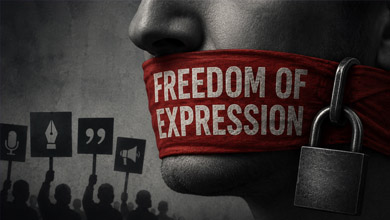
Even though it was a conversation conducted with complete mutual consent, the UA team had to justify their presence and ended up being silenced. It is this discrimination that we should actually discuss.
Tactical Concerns:
The concern within the Muslim community that 'we will be portrayed as fools' is not something to be taken seriously. However, we must pay attention to the second concern; this is the apprehension that it will shatter Kerala's social atmosphere, hand weapons to adversaries, and fuel anti-Muslim hatred. The non-Muslim secular society shares this concern as well.
Although not principle-based, this apprehension is a tactical one. Yet, operating behind this is an old logic: minority religious expressions are not evaluated based on what they are actually doing; rather, they are judged based on how the majority community will react to them. Here, the majority of people in the majority community are not hostile; only a very small section is like that. A small section of people. If Muslims set limits on themselves in public spaces out of fear of such a group, where will we stop imposing these bans?
Dangerous Silence:
Behind the Sangh Parivar's protest lies a threat to fuel violence by raising the allegation of 'religious conversion.' It is precisely here that the failure of secular public society ceases to be a mere void and becomes equivalent to aiding aggression.
The call for physical violence against the UA team was an overt campaign of aggression. However, there was a heavy silence from the secular society against this. While the violence of the Sangh Parivar is direct and visible, the violence created by this silence is systemic violence.
This systemic violence is something that goes unnoticed against the backdrop of everyday life. It is the practice of withdrawing empathy and refraining from calling threats out for what they are, in order to avoid compromising one's preferred political positions. The fact that the secular society, which rushes forward to censor a call to talk about God, remains silent against open calls for violence is part of this systemic violence.
A liberalism that cannot resist threats of violence faster than it opposes consensual conversations clearly reveals what right it actually values and that is certainly not freedom of expression. This is not just an issue of freedom of opinion.
Translated By: Beena Subair