

Difference in the Sources of Knowledge
✒ Muhammad Fayas, Nadapuram
17 October 2026, 6 Jumada Al-Awwal 1448 AH
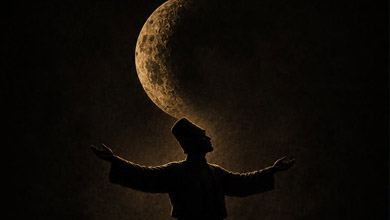
(Sufism: Spirituality or Philosophy? - Part 5)
The foundational sources of Islam are the Noble Qur'an and the Sunnah of the Prophet ﷺ. However, it is claimed that certain Sufi orders (Tariqas), extreme Sufis, and some other Sufis have completely different sources! These include Ilham (inspiration), Kashf (unveiling/divine disclosure), Ru'ya (dreams), and contact with Jinns. This group claims that their Sheikh (spiritual leader) can directly receive knowledge from the Prophet, whether in a dream or in a conscious state.
"Sufis believe that the words of Allah and the Prophet ﷺ have both outer (exoteric) and inner (esoteric) meanings; the outer meaning can be easily understood by everyone, but only they know the inner and hidden meanings!
Hulul and Wahdat al-Wujud
It led them to a specific belief regarding Allah. Some Sufis began adopting terms like ‘Hulul’ (God merging or indwelling within creation). Others spoke of ‘Wahdat al-Wujud’.
In short, ‘Wahdat al-Wujud’ is a philosophical concept that considers Allah and the universe to be a single reality. It views everything in this universe, from the massive planets and stars to animals and insects, as various forms and manifestations of Allah Himself.
Ibn Arabi, a major leader of Tasawwuf (Sufism), described Wahdat al-Wujud as follows:
“This is not a material unity, but an exemplary and spiritual unity.”
That is, according to Ibn Arabi, ‘Haqq’ (Allah) appears in the form of creation, much like a shadow is to the owner of the shadow. Your shadow is proof that you exist; if you do not exist, there is no shadow. According to Ibn Arabi, the universe is merely a shadow of Allah.
Prophethood and Sainthood (Wilayah): A Sufi Perspective
Some Sufis elevate the status of the Prophet above human status. Others go to the complete opposite extreme, claiming that the Prophet did not know the sciences of Sufism (Tasawwuf). Still others go so far as to claim that the Prophet ﷺ himself is Allah seated upon the Throne (Arsh)!
Now, if we look at the matter of the Walis (saints/Awliya), there are Sufi Tariqas (orders) that consider them to be above the Ambiya (prophets). They claim that Awliya possess supernatural abilities to control worldly affairs and to alter fate (Qadr)!
To them, even Paradise and Hell have different meanings. Paradise is not their goal, and Hell is not their fear. Some among them even regarded Iblis (Shaithan) and Pharaoh (Fir'aun) as the most perfect worshipers and true monotheists (Tawheed)!
In acts of worship, they created special forms of worship exclusively for themselves; they claimed that the Prophet's Sharia (law) is for common people, whereas they have their own specific Sharia.
Regarding what is Halal and Haram, some exempted themselves from Takleef (religious obligations) and considered everything to be Halal!
Those who deceive their followers in this manner turn them into their slaves, or render them incapable of thinking anything else. The Sheikh is then able to prevent them from straying from his path.
In some Sufi orders (Tariqas), even if the disciples (Murids) see with their own eyes the Sheikh doing something that is clearly forbidden (Haram) in the Qur'an and Sunnah, they will justify him, as if he has done no wrong! In this way, followers become blind devotees of the Sheikh; this is ‘Tariqa.’ This has become the backbone of the Sufi movement.
It is from here that a new concept about Tasawwuf emerges: ‘Sufi Sharia.’ Although on the outside it appears to be worship and Dhikr (remembrance of God), on the inside it is an entirely different world. They believe that through this Sharia, they are drawing closer to Allah.
(To be continued )
Translated By: Beena Subair