


Life After Death; ‘The Logic of inevitability’
✒ Mehboob Madani Ottappalam
3 October 2026, 0 22 Rabi al-Thani 1448 AH
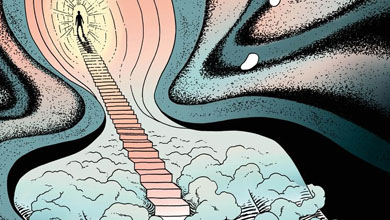
Life after death is the solution to many of the problems that constantly trouble the human mind. Since no one can deny the reality of death, it offers profound insight into the divine. It is the one undeniable truth that can be stated with absolute certainty about every living human being . In malayalam, the word 'martyan’ is used as a synonym for human being. This word originates from the concept of ‘one who dies or mortal.'
No matter how great people are, whether they are noble Prophets, powerful rulers, legendary builders, the wealthy, renowned scholars, or inspiring poets, none have ever escaped the divine decree of death. Everyone living today, and all who are yet to be born, will one day return to this earth. Neither name, fame, nor power can stand in its way.
Death accompanies human beings like a shadow. Water, which gives us life, can bring death when it turns into heavy rain. The air we breathe can cause death if it blows as a fierce storm. Sunlight is essential for life, but extreme heat from it can also end life, many people die of sunstroke every summer. Some have even choked on their food or medicine. It is a clear reminder that death can come through the very things we need to survive.
Death enters the hut and the palace alike. It can claim the patient and the doctor at any moment. Here, it is worth recalling the reality highlighted by the Prophet ﷺ, who reminded us that death is the destroyer of all worldly pleasures.
Does human life end completely with death? If the answer is yes, then many questions remain unresolved. Why, then, was this life given? Countless humans have lived on this earth, performed various deeds, and passed away. Throughout human history, many rulers who unjustly killed thousands, or incited the murder of lakhs, lived in luxury and left this world without facing justice. Where will they be punished for their evil deeds?
What reward did those who performed great good, whom the world still remembers today, receive before they passed away? Many of them were brutally and unjustly murdered. Others endured severe persecution and social boycott. Rather than gratitude, society responded to them with stoning and ridicule.
The afterlife is the hope of thousands of people around the world who are being oppressed and unjustly victimized. Yes, a world is surely to come where everyone will receive true justice and the full reward for their deeds.
The day of that judgment, which the hearts of good human beings, born as people and unblinded by arrogance, deeply long for, is not far away. Just as every night gives way to a new dawn, the life after death will reveal itself before us as a grand truth. That reality will be clearer than the light we see with our naked eyes today. What we must reflect upon is whether we have made the necessary preparations for that journey.
Can we truly say that whatever we cannot see or know does not exist?
Two children are conversing in their mother's womb. The first one is sharp and insightful, with a clear understanding of the womb they currently live in and the life on Earth that awaits them after pregnancy. The second one, however, is a denier of truth. The second child said, "I do not believe a mother exists at all. What possible reason is there to believe in such a presence? Have you ever seen her face to face?" The first child replied, "How can you deny our mother? "The place we are living in right now is her womb. Look at how much comfort and security provided here, perfectly suited for our current state! What's more, can't you see the nourishment continuously flowing into our bodies?" "Where else could it be coming from if not from our mother's body? These signs alone are more than enough to prove that she exists. In a short while, we will have to leave this place. Even out there, we can only live safely if our mother continues to care for us."
Unwilling to accept the truth through reason and these obvious signs, the second child refused to back down. He sneered, "A world outside this womb we live in?! Life out there too?! That can never be!" "If you want me to believe that, show me someone who went out of here and came back." The wise child replied, "Brother, once someone goes out there, no one can ever return here, not even us. The physical changes happening to us and our growth in size are all part of our preparation for that world to come." "These signs convince us that there is a reality far beyond the limited knowledge we have from where we stand."
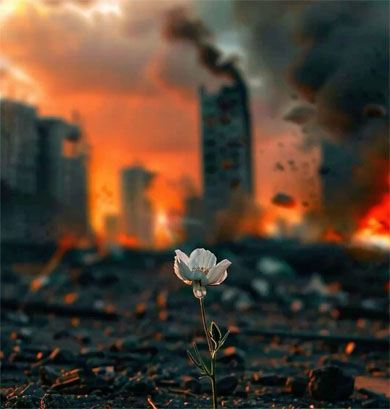
Although this conversation is purely imaginary, there are many lessons for us to draw from it. After all, every one of us spent a set time inside our mother's womb before emerging to live in this world. Just as it seems clear to us now, having passed through those stages and living in this world today, how completely meaningless is the argument of one who claims that there is no mother simply because they cannot see her in the womb, or that there is no world outside because no one has ever returned to the womb after birth. A child in the womb has limited knowledge, and even as fully grown humans, we do not escape that same limitation. If all five of our senses are limited, the knowledge we gain through them cannot be complete either. Therefore, claiming that there is no life after death based on this limited knowledge is completely illogical. This is why Allah, the Creator of the universe, sent messengers to humanity, to provide clear and precise knowledge regarding this reality.
According to the Islamic perspective, human life consists of four main stages. The first is the time spent inside the mother's womb. The second is the period from birth until death, the worldly life during which a person performs their deeds. The third is the world of Barzakh, extending from death until the Day of Judgment. The fourth and final stage is the eternal life following the Judgment, where one meets their ultimate reward or punishment.
"Life After Death: The Logic of Necessity"
The evidence clearly shows that each stage of human life, designed in this manner, demands the necessity of the next. For instance, eyes are formed inside the mother’s womb, yet it is impossible to see anything there. For their true purpose to be fulfilled, one must step out into a world filled with light beyond the womb. Hands and legs develop right inside the womb, yet there is no space there to grasp things or to walk around. For their purpose to be fulfilled as well, a person must enter the next stage of life on earth.In the same way, for the purpose of almost every organ, except perhaps the umbilical cord, to be fulfilled, human existence on earth becomes necessary. In other words, the stage spent in the womb is both a preparation for the life on earth that follows and clear evidence that it must exist. And so, through the phenomenon of birth, humans begin their life on earth. Some live lives filled with good deeds, many engage only in wrongdoing, and others lead a life of both good and bad. According to human nature's demand for fairness, those who do good deeds must receive their due reward, those who commit evil must be punished, and the innocent must be granted justice. That is why humans establish courts, legal systems, and administrative frameworks for reward and punishment. The reality is that this deep-seated desire for justice exists even in the minds of those who deny God and the hereafter. No matter how hard humans try, it is impossible to deliver complete reward or punishment for all their good and bad deeds within this earthly life.
Imagine a family peacefully asleep in their home at night. Suddenly, a fire breaks out. Seeing the danger, a believer living next door breaks down the door, rushes inside, and after a difficult effort, manages to rescue the family. But in the process, he suffers severe burns and tragically loses his life. From a purely material point of view, what he did might seem pointless. After all, what did he gain from his actions? He lost his very life. But when viewed through a spiritual lens, he performed an act of immense goodness, rescuing several human lives is no small feat. He clearly deserves a reward for what he did. That is why the Creator, who is completely just, created life after death.
A criminal, who made cruelty the very high of his life, broke into a house, killed the entire family, and stole their gold and money. But as he tried to escape, he fell into a well behind the house and died. Anyone who hears this story would naturally think two things: the victims deserve justice, and the murderer must be punished. Physical courts and legal systems cannot deliver either of these. After all, both the criminal who committed the crime and the family who was attacked are already dead. This is where anyone with a heart sees why we need life after death, a place where true justice can finally happen.
Many ancient religious books talk about life after death, but the Noble Qur'an, as the final scripture, gives the clearest and most accurate information about it. Earlier scriptures were changed over time, including their ideas about God and the afterlife. However, the Qur'an, as the final book, remains completely different and unique. Just as it was revealed to Prophet Muhammad ﷺ centuries ago, it remains unchanged today. It stays as a guiding light for humanity.
Allah says: ”Every soul will taste death. And you will only receive your full reward on the Day of Judgment. Whoever is spared from the Fire and is admitted into Paradise will ˹indeed˺ triumph, whereas the life of this world is no more than the delusion of enjoyment” (3:185)
Translated By: Suneera PN