


History: The Qur’anic Perspective
✒ Raihan Shaheed
12 October 2026, 1 Jumada Al-Awwal 1448 AH
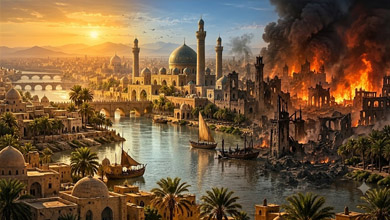
Historians have presented various theories to explain the rise and fall of civilizations. Some cite economic factors, some point to geography, some to military strength, and others to social structure. However, the Qur'an explains history in a different manner. The Qur'an does not view history as a series of random events. Instead, it presents history as a process operating on the basis of the Sunnah of Allah.
“Indeed, Allah will not change the condition of a people until they change what is in themselves.” (Qur'an 13:11)
Allah's blessings are not permanent entitlements; they are responsibilities that must be safeguarded. That is why, when the early Muslim community remained closely attached to the Qur'an, they became an example to the world. And when that very same community drifted away from Qur'anic values, they grew weak.
This verse is indeed the essence of Muslim history. The victory of Badr and the rise of Andalusia are part of this very same law. The fall of Baghdad is also part of this same law. The condition of the Muslim world today is no exception to this law either.
Allah says in another place: “That is because Allah would not change a favor which He had bestowed upon a people until they change what is in themselves...” (Qur'an 8:53).
This verse teaches an important truth. Allah's blessings are not permanent entitlements; they are responsibilities that must be safeguarded. That is why, when the early Muslim community remained closely attached to the Qur'an, they became an example to the world and when that very same community drifted away from Qur'anic values, they grew weak.
The Qur'an provides not only warnings, but also offers hope. Allah says: “Allah has promised those who have believed among you and done righteous deeds that He will surely grant them succession [to authority] upon the earth... and that He will surely substitute for them, after their fear, security.” (Qur'an 24:55).
This promise is not meant for a specific generation alone; it is meant for the believers of every era. However, this promise comes with conditions, such as faith, righteous deeds, and sincerity toward Allah. History teaches us that there are no shortcuts to success. Success cannot be achieved through political slogans, emotional speeches, or tales of past glory. The renaissance of an Ummah begins in the hearts. From there, it moves to the homes, then to educational institutions, to society, and ultimately to civilization. Therefore, the greatest lesson from Muslim history is this: Allah changes history only when human beings change themselves.
What We Must Learn from History
History is not merely a list of events; it is a repository of lessons. When examining the fourteen centuries of the Muslim Ummah's history, certain fundamental truths that every generation must learn become clearly evident. When we understand how our ancestors rose and why they grew weak, the path toward the future will become much clearer.
1. Tawheed is Our Greatest Strength:
At the center of the early success of the Muslim community was Tawheed. Worshipping Allah alone and relying upon Him alone was not merely a declaration of faith; it was a worldview that influenced every sphere of life. It was the realization that power, wealth, and fame are all subject to the decree of Allah that rendered the early Muslims fearless.
Wherever a deviation from this faith occurred, defeat had to be borne.
2. Seeking Knowledge Must Be Viewed as Worship:
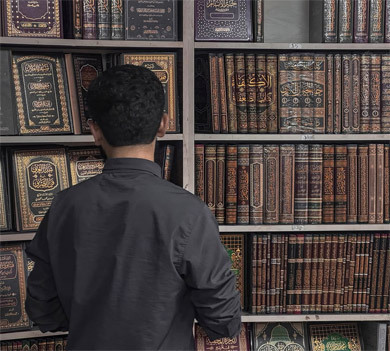
The very first divine revelation was "Iqra". The growth of Islamic civilization began in libraries, not in palaces. Today, the nations leading the world are those that invest in research, education, and science. The Muslim community must once again bring education and research back to the center stage. If a community merely continues to consume the inventions of others, it will remain a consumer society; it cannot become creators.
3. No Elevation Without Unity:
Internal divisions among Muslims were one of the primary reasons behind all major setbacks in history. The Qur'an states: “...and do not dispute and [thus] lose courage and then your strength would depart...” (Qur'an 8:46).
Differences of opinion are natural. However, when they lead to enmity and mutual destruction, the community becomes weak.
4. Institutions Must Be Built:
History was shaped not just by individuals, but also by the institutions they built. Bayt al-Hikmah, Al-Azhar, Nizamiyya madrasas, Waqf institutions, hospitals, and libraries nurtured generations. Even today, what the Muslim community needs are enduring educational, research, economic, and social institutions.
5. Economic Strength is Essential:
Spirituality and economic strength are not mutually exclusive. Systems such as Zakat, Waqf, and Baitul Mal were designed to ensure social justice and economic self-sufficiency. An economically weak community cannot achieve major advancements in education or social service.
6. Moral Leadership:
The great Muslim leaders of history were those who prioritized responsibility over power. Abu Bakr, Umar, Uthman, Ali ( رضي الله عنهم), Umar ibn Abd al-Aziz, and Salahuddin Ayyubi are remembered to this day for their sense of justice and firmness of faith.
7. Dawah and Service:
Islam reached many parts of the world through traders, scholars, teachers, and service workers. Evidence of this can be seen from Kerala to Indonesia. Therefore, the strength of a Muslim community lies not in its population, but in its contributions.
The community that remained close to the Qur'an rose. The community that embraced knowledge grew. The community that established justice was honored. And those who drifted away from these values grew weak.
The Warning History Gives
Muslim history inspires us, but at the same time, it also serves as a warning. That warning is crystal clear: no nation enjoys permanent victory. Even the most powerful empires in history have ceased to exist. Today, there are no Romans; there are no Sassanids; the Mongol dominance is no more; and the British Empire, too, has become a chapter of history. Similarly, the Muslim world has also experienced its own rises and falls. The Qur'an clearly explains the reason for this
Allah says: “And these days [of varying fortunes] We alternate among the people...” (Qur'an 3:140).
Victory and defeat are part of history, but they are not accidental. They occur in accordance with the Sunnah of Allah. If a society abandons justice, neglects knowledge, lets corruption become rampant, immerses itself in luxury, and strays from Allah's guidance, its strength will gradually diminish.
This is a historical law that applies not only to Muslims, but to all societies. That is why the Qur'an repeatedly tells the stories of past nations, not to grieve over them, but to prevent us from becoming like them. It is precisely here that we must engage in self-introspection today. Are our discussions centered around the past, or are they directed toward the future?
We praise the Muslim scientists of the past; but are we nurturing new scientists? We take pride in Al-Khwarizmi; but are we striving to make our children excel in mathematics and technology? We speak of the libraries of Baghdad; but are we establishing new libraries and research centers in our cities? We remember Salahuddin; but are we cultivating leaders who stand for justice and morality?
History is a mirror. In it, we see not only the past, but also our future. The greatest warning of history is this: communities that merely talk about past glory will live in history books. It is the communities that create new glory that write history.
A Generation That Creates History
As we take pride in the heroic history of our predecessors, let us ask ourselves: are we merely reading history, or are we creating history?
When a community begins to live solely by taking pride in the achievements of its ancestors, its creativity gradually fades away. Speaking about Al-Khwarizmi at every conference, praising Salahuddin Ayyubi in every speech, and describing the grand history of old Baghdad in every article alone will not bring about a renaissance. History ought to be honored. However, what is even more important is creating generations that follow in the footsteps of history.
Islam reached many parts of the world through traders, scholars, teachers, and service workers. Evidence of this can be seen from Kerala to Indonesia. Therefore, the strength of a Muslim community lies not in its population, but in its contributions.
What the Muslim community needs today are new Al-Khwarizmis, new Ibn al-Haythams, new Ibn Khalduns, and new Salahuddins. They must grow from our homes. They must be shaped from our madrasas, universities, and research centers.
When a child proves excellence in science, mathematics, and research along with memorizing the Qur'an, the soul of Islamic civilization gains vitality. When a Muslim youth achieves world-class standards in technology, medicine, economics, law, or other fields of knowledge, it is not merely their personal success; it is the success of the Ummah as well.
Every teacher can nurture a future scientist. Every parent can raise a future leader. Every mosque can become a center of knowledge. Every student can transform their studies into a service for the Ummah. The Prophet ﷺ said: "The best among people are those who are most beneficial to people" (Al-Mu'jam al-Awsat). It is not enough to study history; one must also create new history that benefits society.
Become Part of History
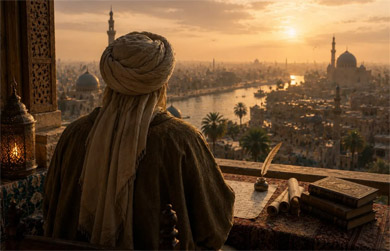
Muslim history is one of the grand legacies of humanity. It is a history of knowledge, justice, culture, science, morality, and humanity. Similarly, it is also a history of warning. When values were lost, empires grew weak. When knowledge was neglected, leadership was lost. When unity broke down, strength dissolved as well. Allah does not honor any community based on its past. It is on the basis of their faith and deeds that Allah elevates them. The Qur'an states: "You are the best nation produced [as an example] for mankind. You enjoin what is right and forbid what is wrong and believe in Allah." (Qur'an 3:110).
Our children should not merely become a generation that studies history; they must become a generation that creates history. They should not only be those who read about the libraries of Baghdad; they must be a generation that constructs new research centers and institutions of knowledge. They should not merely be those who listen to the heroic tales of Salahuddin; they must become leaders who stand for justice, truth, and the well-being of humanity.
The title “Khairu Ummah” is not an honor bestowed solely upon a single generation in history. Every generation must strive to become the best nation through their own lives.
We can either live by merely talking about our glorious past, or we can write new history by incorporating into our lives the values that created that history. Which path will we choose?
Our children should not merely become a generation that studies history; they must become a generation that creates history. They should not only be those who read about the libraries of Baghdad; they must be a generation that constructs new research centers and institutions of knowledge. They should not merely be those who listen to the heroic tales of Salahuddin; they must become leaders who stand for justice, truth, and the well-being of humanity.
History remembers great people. History is written by generations that dare to dream, act with faith, and contribute to humanity.
Translated By: Dr.Minha Subair