


How to Identify Learning Difficulties in Children?
✒ Dr. Faiza PP
25 July 2026, 11 Safar 1448

When a child suddenly loses focus while studying, forgets what they have learned despite repeated explanations, or falls behind other children in class, many parents experience these challenges. However, these difficulties are not always simply due to "laziness" or "lack of concentration." Sometimes, they may be signs of a learning disability.
Some children experience persistent difficulties with basic learning skills. This is generally referred to as a "learning disability." It does not mean that the child has lower intelligence. Rather, it involves specific difficulties in understanding and processing information.
What is a Learning Disability?
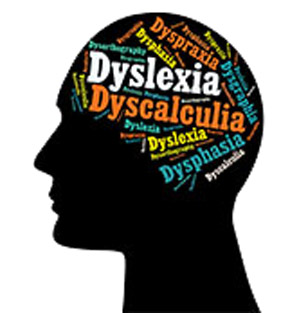
A learning disability refers to persistent difficulties with basic academic skills such as reading, writing, and mathematics. Dyslexia, which affects reading, dysgraphia, which affects writing, and dyscalculia, which affects mathematical skills, are some of the main examples.
Common Signs in Children
Difficulties with Reading
• Taking longer than expected to recognize letters
• Reading words incorrectly
• Reading at a very slow pace
Difficulties with Writing
• Reversing or writing letters and numbers upside down
• Writing words without proper spacing
• Having unclear or difficult-to-read handwriting
Difficulties with Mathematics
• Difficulty recognizing numbers
• Struggling even with simple calculations
• Difficulty understanding concepts such as time and money
Difficulty Concentrating on Studies
• Being unable to maintain focus while studying
Speech and Language Difficulties
• Taking more time to find the right words
• Taking longer to understand instructions
Memory Difficulties
• Quickly forgetting what has been learned
• Difficulty remembering things in the correct order
How Can It Be Identified?
• Pay attention to the observations and feedback of the child's teachers.
• Look for significant differences in the child's academic performance compared with peers of the same age.
• Observe persistent difficulties that arise when helping the child study at home.
Identifying a learning disability can be an anxious and guilt-filled period for many parents. Questions such as, "What is wrong with my child?" and "Will this get better?" may trouble them. How parents respond in this situation is very important.
What Parents Can Do
• Never blame or criticize the child.
• Approach the child with patience and support.
• Explain things slowly and repeat them as necessary.
• Communicate regularly with the child's teachers and make necessary adjustments.
• Identify the child's strengths and encourage them for even small improvements.
• Help them develop hope and optimism through prayer.
• Consider specialized educational methods, such as visual teaching, as well as appropriate therapies.
• If necessary, seek help from a psychologist or special education professional.
Children with learning disabilities can make excellent progress when they receive the right guidance and support. Therefore, recognizing the signs early and providing the necessary assistance is essential.
Every child is different. Understanding and supporting them is one of the greatest responsibilities of parents. As parents, we should also sincerely pray for our children.
Translated By: Raihan Shaheed