


The Shia and the Qur’an
✒ Dr. TK Yusuf
3 October 2026, 0 22 Rabi al-Thani 1448 AH
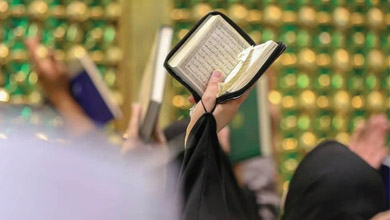
Muslims worldwide believe that the Noble Qur'an is a divine revelation, uniquely preserved under Allah's own safeguard, as stated in the text: "Indeed, it is We who sent down the Qur'an and indeed, We will be its guardian" (Qur'an 15:9).
How could a Muslim harbor doubt regarding the authenticity of the Qur'an? Yet, according to certain Shia perspectives, the existing textual tradition contains omissions or defects. They allege that the complete Qur'an was originally with Ali رضي الله عنه and was subsequently inherited by the Imams after him.
This assertion, framed to elevate Ali رضي الله عنه, inadvertently undermines the Qur'an, the Sahabah, and Ali رضي الله عنه himself. If Ali رضي الله عنه possessed a separate, "complete Qur'an," why did he not present or declare it even during his own Caliphate?
This claim was first advanced in a work attributed to the Shia figure Sulaym ibn Qays. Texts such as Al-Kafi hold central authority within their tradition. Similar claims appear in commentaries like Al-Safi and Al-Burhan. Nevertheless, such allegations have not compromised the integrity of the Qur'an, which Allah guaranteed to protect.
The Shia scholar Muhsin al-Kashani asserted that the Qur'an does not remain in the exact form revealed to the Prophet Muhammadﷺ, claiming that alterations were made and portions omitted. Likewise, Al-Kulayni recorded in Al-Kafi a narration claiming that the Qur'an brought by Jibril to the Prophet Muhammadﷺ originally contained seventeen thousand verses, implying that the remainder was omitted. They further claim that the codex compiled by Ali رضي الله عنه, contained a higher verse count and a different surah arrangement, relying on fabricated reports to support these assertions.
Believing that the complete version of the Qur'an will only be brought by the promised Mahdi, many Shias do not strive to study the Qur'an or live in accordance with it. Within the broader Muslim community, vast numbers of believers have memorized the Qur'an in its entirety. By contrast, those among the Shias who have memorized the Qur'an according to the rules of Tajweed are relatively few.
Although the Shias formulated their own narrative regarding a distinct text, they were unable to win over the general public; it is for this reason that they propagate the idea that the Mahdi will arrive with the true Qur'an. The Shia scholar Ni'matullah al-Jaza'iri states: "The Shia Imams instruct their followers thus: Until the Mahdi arrives, learn to recite the existing Qur'an in your prayers and daily worship. Once he appears, this Qur'an will be lifted, and another Qur'an will be revealed in its place.”
Another Shia strategy involves reinterpreting Qur'anic verses to center upon the Imams. For instance, in Surah At-Taghabun, Verse 8, "So believe in Allah and His Messenger and the Light which We have sent down", their interpretation asserts that the word "Light" refers to the light of Ali and the Imams. However, it is as clear as daylight that the "Light" mentioned in this verse refers directly to the Qur'an itself. Furthermore, if that light were taken to mean Ali and the Imams, one would have to logically conclude that they descended directly from the heavens.
Similarly, in interpreting the verse "Indeed, this Qur'an guides to that which is most suitable" (Surah Al-Isra, Verse 9), they claim it means "this Qur'an guides toward the Imamate and Wilayah." Likewise, regarding the verse "They wish to extinguish the light of Allah with their mouths" (Surah As-Saff, Verse 8), they interpret it to mean "they attempt to extinguish the leadership of the Commander of the Faithful (Amir al-Mu'minin).”
The Shia interpretation of the Verse of Light (Ayat an-Nur, Surah An-Nur, Verse 35) takes an equally unusual path. In the passage "The example of His light is like a niche within which is a lamp," their explanation asserts that the "niche" refers to Fatima رضي الله عنها. The "lamp" within the niche is said to be Hasan رضي الله عنه, while the "glass vessel" containing the lamp represents Husayn رضي الله عنه. The "blessed tree" is interpreted as the Prophet Ibrahim عليه السلام. They proceed to allegorize the entire verse along these lines. Similarly, regarding the verse "And he to whom Allah has not granted light has no light" (Surah An-Nur, Verse 40), the Shia interpretation claims it means that whoever Allah has not granted Imams from among the descendants of Fatima has no Imam.
Furthermore, they interpret the Qur'anic concepts of Shirk and Kufr as a denial of the Wilayah of Ali رضي الله عنه. Likewise, Tawhid is reinterpreted as acknowledging the singular leadership of the Imams. Righteous deeds are defined as possessing knowledge of the Imams and acting according to their directives. In the verse "They took devils as allies," their interpretation claims it refers to those who swore allegiance to leaders other than Ali رضي الله عنه. Expressions in the Qur'an referring to prophets and the righteous, such as "the truthful," "those who remember God," and "those who have been given knowledge", are, according to the Shia perspective, attributes exclusive to their Imams.
Regarding the Qur'anic injunction "So ask the people of knowledge if you do not know" (Surah An-Nahl, Verse 43), they render the meaning as "ask the Imams." The Qur'an also asks, "Are those who know equal to those who do not know?" (Surah Az-Zumar, Verse 9). In this context, they contend that "those who know" refers to the Shias, while "those who do not know" refers to the Sunnis. Similarly, they claim that "the signs of Allah" mentioned throughout the Qur'an refer directly to the Imams themselves.
In this manner, they misinterpret numerous verses, terms, and expressions throughout the Qur'an; the instances cited above represent merely a few examples.
By applying Qur'anic verses revealed regarding disbelievers, polytheists, and hypocrites directly to the first three Caliphs and the Companions, the Shias effectively demonstrate that they stand outside the bounds of mainstream Islam.
It is evident that this constitutes a devious strategy designed to divert people from the true path of the Qur'an and to provide cover for their un-Islamic doctrines. How, then, can the Shias, who misinterpret the Qur'an in such a manner, truly represent Islam?
(To be continued)
Translated By: Dr. Minha Subair