


The RSS’s Sufi Love Is a PR Strategy!
✒ Editorial
24 October 2026, 13 Jumada Al-Awwal 1448 AH
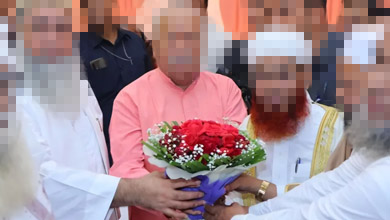
Under the supervision of RSS chief Mohan Bhagwat, efforts to promote the ideas of Sufi movements in Uttar Pradesh and establish local community groups centred around Sufi shrines have sparked considerable debate. A movement that built its organisational strength and political influence by positioning Muslims as adversaries is now attempting to embrace one particular ideological strand within the same community. The contradictions and political calculations behind this move warrant serious analysis.
The very foundation of the Hindutva politics envisioned by the RSS is the concept of “othering”. In its ideological texts, including Bunch of Thoughts (Vichardhara), Muslims are identified as a major “internal threat”, portrayed as outsiders to Indian culture. The bulldozer rule imposed on minorities in Uttar Pradesh, disputes over places of worship, demolitions, and discrimination in citizenship laws are all practical manifestations of this ideology. Yet, when the RSS sets out to promote Sufism in the same state, it calls into question the very basis of the “internal threat” theory it has propagated for so long.
Rather than opposing Muslims as a whole, dividing the community into “good Muslims” and “bad Muslims” is a strategy the Sangh Parivar has been pursuing for years. The aim is to portray Sufism as a form of Islam that blends with “Indian culture” and is therefore “good”, while depicting other Islamic traditions as foreign and extremist, and therefore “bad”.
Exploiting ideological differences and tensions within the Muslim community to create divisions in the Muslim vote bank and thereby consolidate its own political dominance is another key objective of this strategy.
The intention behind this initiative is not to embrace Sufism as it is, but to “Indianise” it or confine it within a Hindutva framework. It is also a PR strategy designed to present an image to the outside world that Islam is compatible with Hindu philosophical traditions such as Advaita, and that the RSS welcomes those who accept what it considers its own culture of tolerance.
On the one hand, Muslim minorities’ homes and mosques are demolished using bulldozers, and their citizenship and rights are denied. On the other, Sufi ideas within the same community are courted and celebrated. This contradiction is not an accidental oversight; it is a carefully planned political strategy. The RSS seeks to turn Sufism into a tool for weakening Muslim unity and consolidating its own political dominance.
This initiative is also intended to counter international criticism that minorities are being persecuted in India and to project an image to the world that the RSS is not opposed to Islam or Muslims, but rather welcomes those who accept what it presents as its own culture of tolerance.
This contradiction is not an accidental oversight; it is a carefully planned political strategy. The RSS seeks to turn Sufism into a tool for weakening Muslim unity and consolidating its own political dominance. Recognising this contradiction is the responsibility of a democratic society.
The notion that the entire Muslim community will flock to the Sangh Parivar simply because self-serving maulanas in suits appear on its platforms singing its praises is nothing more than wishful thinking. The fox that tells the chicken, “Don’t be afraid, I’m here with you,” is hardly harbouring innocent intentions.
Translated By: Raihan Shaheed